A walking plan works best when it starts at your front door, not at an ambitious step count. If you have been mostly inactive, choose a short route you could repeat on an ordinary weekday. This beginner walking plan uses time, comfort and consistency to help you find a workable starting point. It is an example to adapt, not a fitness test or a promise of weight loss.
Build a route before building distance
Choose a level, familiar loop with a clear turnaround point. Check the pavement, lighting and weather, and use shoes that feel secure. A route near home makes it easier to shorten the walk when energy is low. The first few outings are information gathering: notice how your feet feel, whether the pace is comfortable and how you feel later that day.
The NHS notes that brisk walking can contribute to weekly activity. The CDC talk test helps distinguish moderate from vigorous effort.
Background guidance: NHS: Walking for health; CDC: Measuring physical activity intensity.
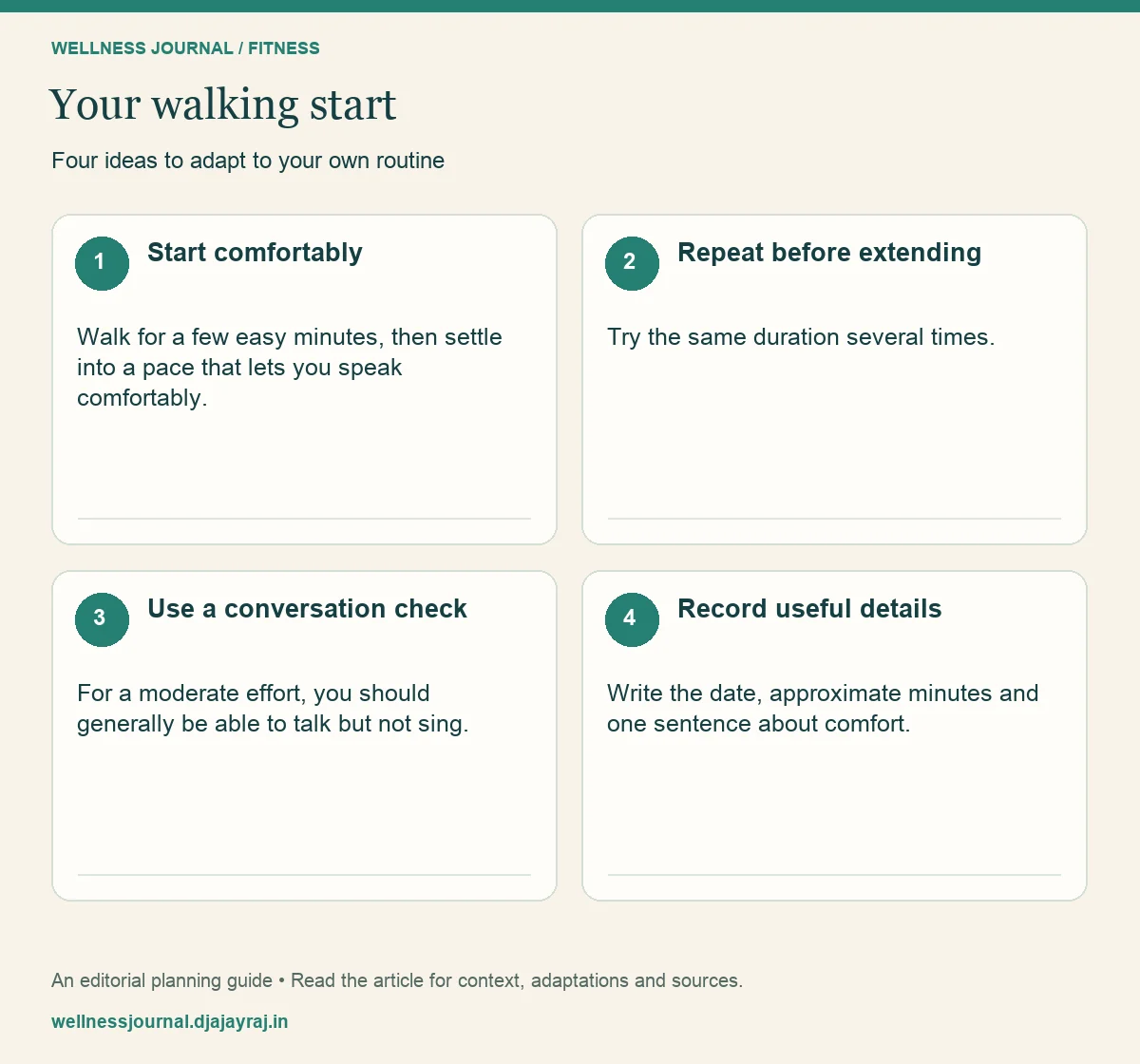
Four practical steps
Start comfortably
Walk for a few easy minutes, then settle into a pace that lets you speak comfortably. Finish before you feel drained. If five minutes is enough today, that is your starting session; the calendar below is not a minimum you must complete.
Repeat before extending
Try the same duration several times. Add a few minutes only when it feels manageable during the walk and afterward. Change time or pace, rather than both together, so you can tell which adjustment suits you.
Use a conversation check
For a moderate effort, you should generally be able to talk but not sing. You do not need to chase this intensity on every outing. Easy walks remain a useful way to practise the routine and enjoy being outside.
Record useful details
Write the date, approximate minutes and one sentence about comfort. A note such as 'the shaded route felt easier' is more useful than judging yourself against someone else's step count. Look for repeatable conditions, not a perfect streak.
An adjustable four-week outline
| Stage | Example session | Decision afterward |
|---|---|---|
| Week 1 | 5–10 easy minutes | Find a comfortable route |
| Week 2 | Repeat or add a few minutes | Check next-day comfort |
| Week 3 | Include a short brisk section | Keep conversation possible |
| Week 4 | Choose a sustainable duration | Repeat before progressing |
Make it work for you
Make a weather backup
Keep an indoor option ready: a clear hallway, an accessible shopping centre or gentle walking on the spot near support. Check local heat and air-quality alerts before going outside. Your backup does not need to match the outdoor session minute for minute. Its job is to preserve an easy starting point when circumstances change.
If you miss several walks
Return to the last duration that felt comfortable. Do not double the next outing to compensate. Treat the interruption as a scheduling problem to solve, rather than evidence that walking is not for you.
Quick checklist
- Keep a shorter route available.
- Carry water when conditions or duration call for it.
- Stop for chest pain, faintness or unusual breathlessness and seek appropriate care.
Common questions
Do I need 10,000 steps?
No universal step target is required to begin. Time and a comfortable effort are often easier starting measures. Choose a target that fits your health, mobility and schedule.
Should I walk every day?
You can choose the frequency you tolerate and enjoy. Several manageable outings are a better starting commitment than a daily rule that leaves you sore or exhausted.