A weekly fitness plan should fit the week you actually have. Start with your fixed commitments, then look for realistic spaces for movement. A plan that assumes unlimited evenings will fail as soon as work runs late. This approach helps you create a visible pattern, including shorter alternatives, without treating every empty calendar slot as an invitation to exercise.
Plan the anchors before the extras
Choose two or three occasions that are most likely to remain available. These are your anchors. They might be a walk after lunch, a suitable strength session on a quieter evening or a weekend activity you enjoy. Add travel, changing and recovery time if they apply. A session that takes twenty minutes may need a longer block in real life.
CDC adult guidance includes at least 150 minutes of moderate activity and muscle-strengthening on two days weekly, with adaptations for individual ability.
Background guidance: CDC: Adult activity guidelines; NIDDK: Changing habits for better health.
Four practical steps
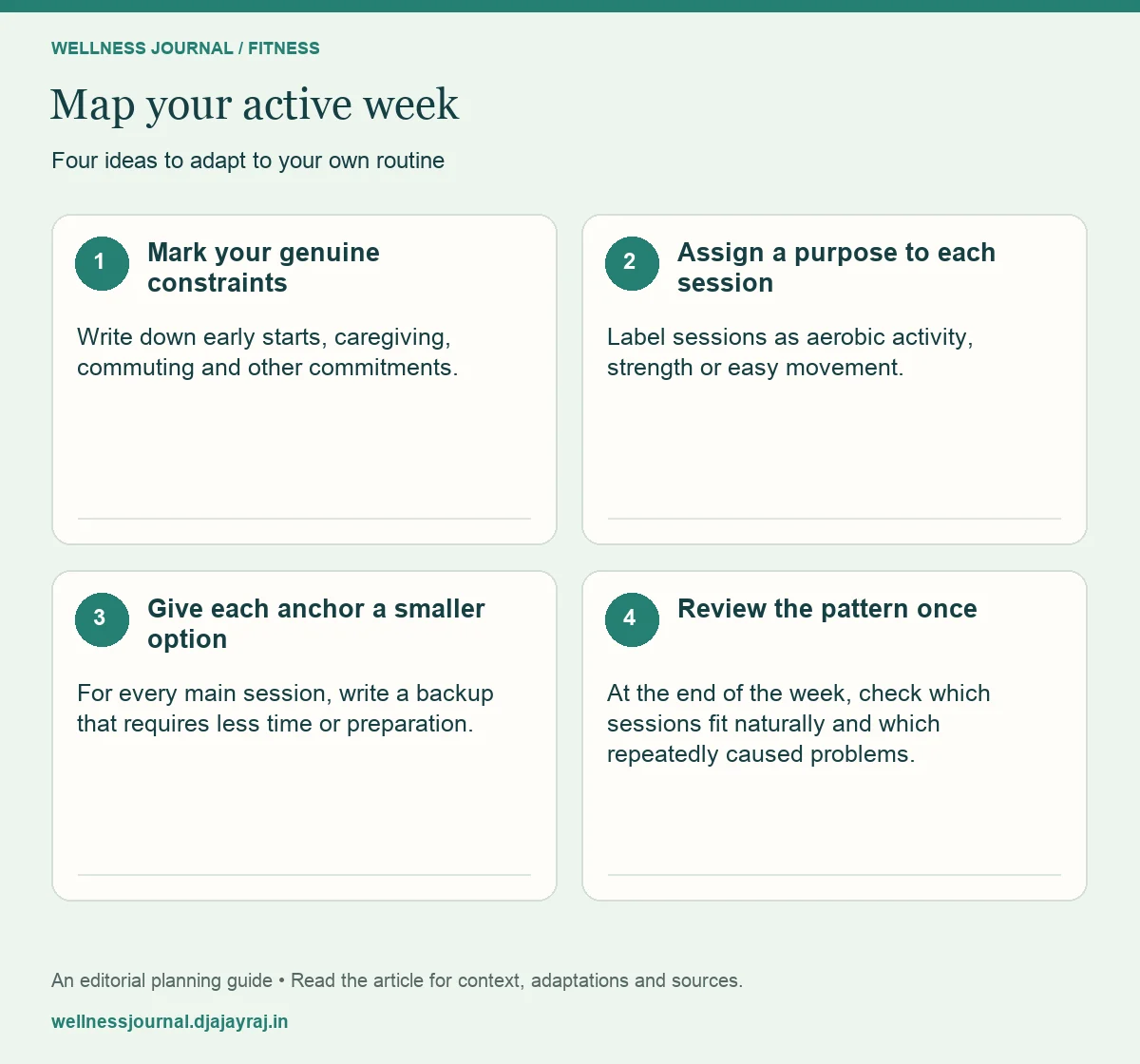
Mark your genuine constraints
Write down early starts, caregiving, commuting and other commitments. Include nights when you usually feel tired. Planning around these facts is more useful than hoping that motivation will make them disappear.
Assign a purpose to each session
Label sessions as aerobic activity, strength or easy movement. This makes the week easier to review. It also helps you notice when every planned activity is demanding or when you have ignored a type of movement you want to include.
Give each anchor a smaller option
For every main session, write a backup that requires less time or preparation. A shorter familiar routine can keep the week workable. The backup should be safe and realistic, not a rushed version of everything in the longer session.
Review the pattern once
At the end of the week, check which sessions fit naturally and which repeatedly caused problems. Move the awkward appointment before adding more. A calendar is a planning tool, not a record of personal worth.
A flexible weekly map
| Window | Main option | Smaller option |
|---|---|---|
| Quiet weekday morning | Comfortable aerobic activity | Shorter route |
| Two suitable days | Adapted strength work | Reduced familiar routine |
| Busy workday | Movement at task transitions | One comfortable break |
| Weekend | Enjoyable longer activity | Easy local outing |
Make it work for you
Build toward guidance gradually
Public activity targets describe an overall direction; they are not a requirement to complete immediately after inactivity. Start where you are and increase gradually if appropriate. People with long-term conditions, pregnancy, disability or symptoms may need a tailored plan. Even a well-designed calendar should be changed when your body or circumstances call for it.
Use one weekly review question
Ask, 'Which session was easiest to start, and why?' The answer may reveal a useful location, time or companion. Repeat that helpful condition before looking for a more ambitious programme.
Quick checklist
- Allow time around the session.
- Include easy days and recovery.
- Keep a realistic fallback for each anchor.
Common questions
What if I only have short windows?
Short periods can contribute to your activity total. Choose appropriate activities and spread them through the week rather than waiting for one large block.
Should I schedule every day?
Only if that structure helps you. A few dependable anchors with flexible options can be easier to maintain than a fully packed exercise calendar.