Vegetable cooking ideas often focus on which vegetable to buy, but texture may be the reason a dish works or fails. The same carrot can be crisp, tender or blended into soup. If you dislike one preparation, you may enjoy another. Start with a familiar flavour and change one texture at a time instead of expecting yourself to enjoy every vegetable immediately.
Identify what you dislike about the usual version
Is it soft, watery, bitter, fibrous or too plain? A specific answer suggests a practical adjustment. You might prefer smaller pieces, a different cooking time or a sauce that fits the meal. Avoid turning preference into a judgement about discipline. Food is easier to repeat when it is prepared in a way you actually enjoy.
NHS guidance encourages variety in fruit and vegetables. Safe preparation depends on the ingredient and cooking method.
Background guidance: NHS: Eating a balanced diet; FoodSafety.gov: Cooking and storage guidance.
Four practical steps
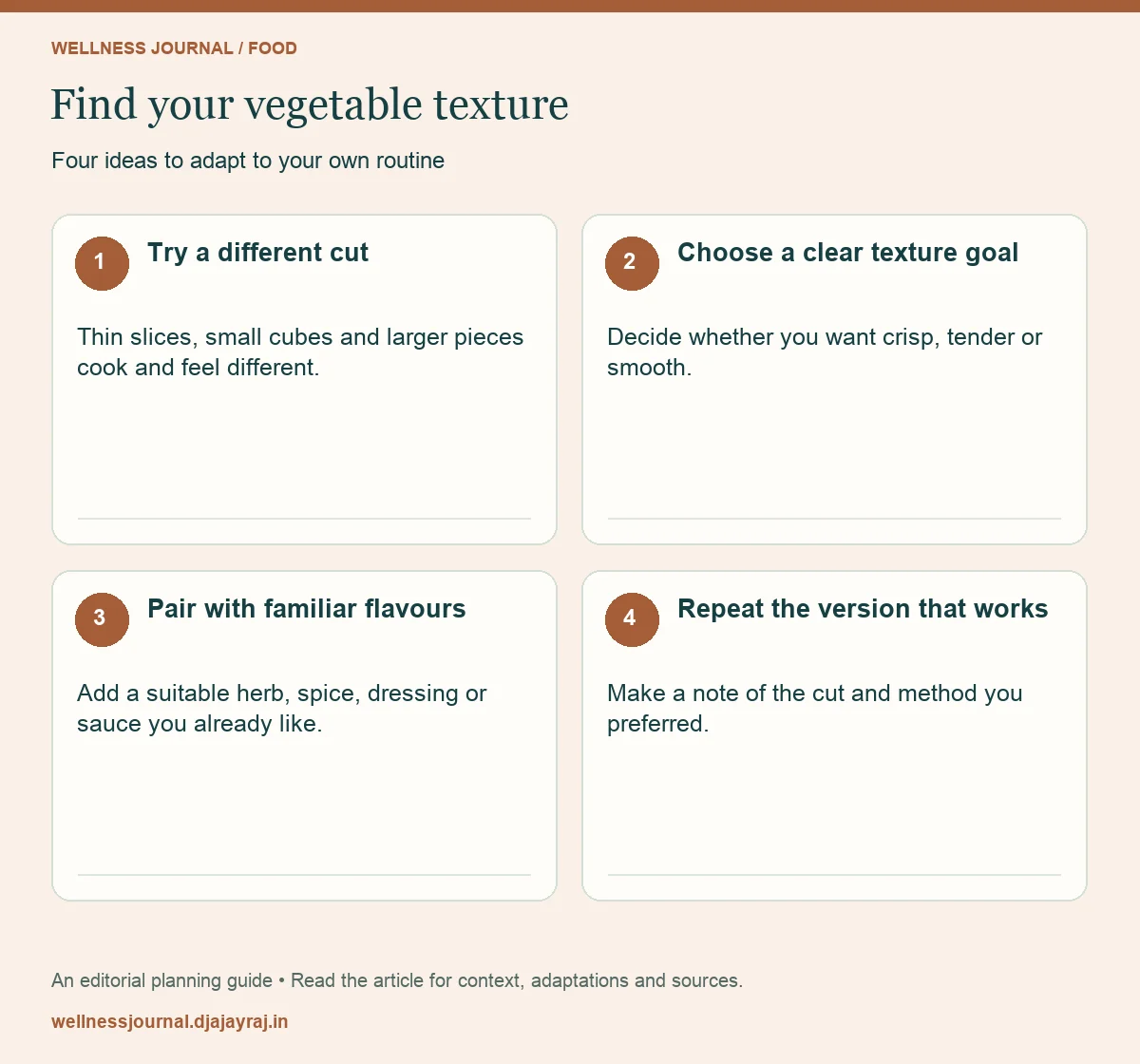
Try a different cut
Thin slices, small cubes and larger pieces cook and feel different. Choose a cut that suits the method and your equipment. Keep fingers safe and use a stable chopping surface; convenience should not require rushing with a knife.
Choose a clear texture goal
Decide whether you want crisp, tender or smooth. Use a reliable method and check the food rather than leaving it on heat indefinitely. Frozen vegetables may work better in some dishes than as a direct copy of a fresh preparation.
Pair with familiar flavours
Add a suitable herb, spice, dressing or sauce you already like. Keep the seasoning compatible with the rest of the meal. You can enjoy vegetables as part of a mixed dish rather than always serving them separately.
Repeat the version that works
Make a note of the cut and method you preferred. Build variety gradually from successful examples. You do not need to buy many unfamiliar vegetables at once to make progress toward a more varied diet.
Match preparation to texture preference
| Preferred texture | Possible preparation | Useful detail |
|---|---|---|
| Crisp | Suitable raw produce or brief cooking | Follow safe preparation |
| Tender | Roasting, steaming or simmering | Check doneness |
| Smooth | Soup or blended sauce | Use safe blending technique |
| Mixed | Vegetables in a familiar dish | Keep flavours compatible |
Make it work for you
Respect sensory and access needs
Texture preferences can be strong and may relate to sensory differences, chewing difficulties or other needs. Choose suitable forms and seek professional advice when eating is restricted or difficult. A general suggestion to try vegetables should not override swallowing guidance, allergies or a prescribed diet.
Test a small portion alongside a familiar meal
A small trial reduces waste and pressure. You can decide whether the new method is worth repeating without making it the whole dinner.
Quick checklist
- Change one feature at a time.
- Use safe cutting and cooking methods.
- Choose textures that suit your needs.
Common questions
Do vegetables have to be raw to be worthwhile?
No. Different preparations can fit a varied diet. Choose safe methods and forms you enjoy.
What if I only like a few vegetables?
Start with those and explore nearby flavours or textures gradually. Seek support if restrictions make meeting nutritional needs difficult.