A healthy grocery list starts with your calendar and cupboard, not with a list of fashionable foods. Count the meals you will actually eat at home, notice what you already own and leave space for plans to change. This approach can reduce duplicate purchases and the familiar feeling of having a full fridge but nothing that forms a meal.
Shop for combinations rather than isolated items
Choose a few meals that share ingredients without tasting identical. Vegetables might work in both a wrap and a warm bowl; a suitable staple may serve dinner and lunch. Add foods you enjoy for flexibility. A list should help you eat, not create a collection of ingredients you feel obligated to turn into complicated recipes.
NIDDK includes planning as part of habit change. Food-specific storage guidance helps turn a shopping plan into food that is used safely.
Background guidance: NIDDK: Changing habits for better health; FoodSafety.gov: Cold food storage chart.
Four practical steps
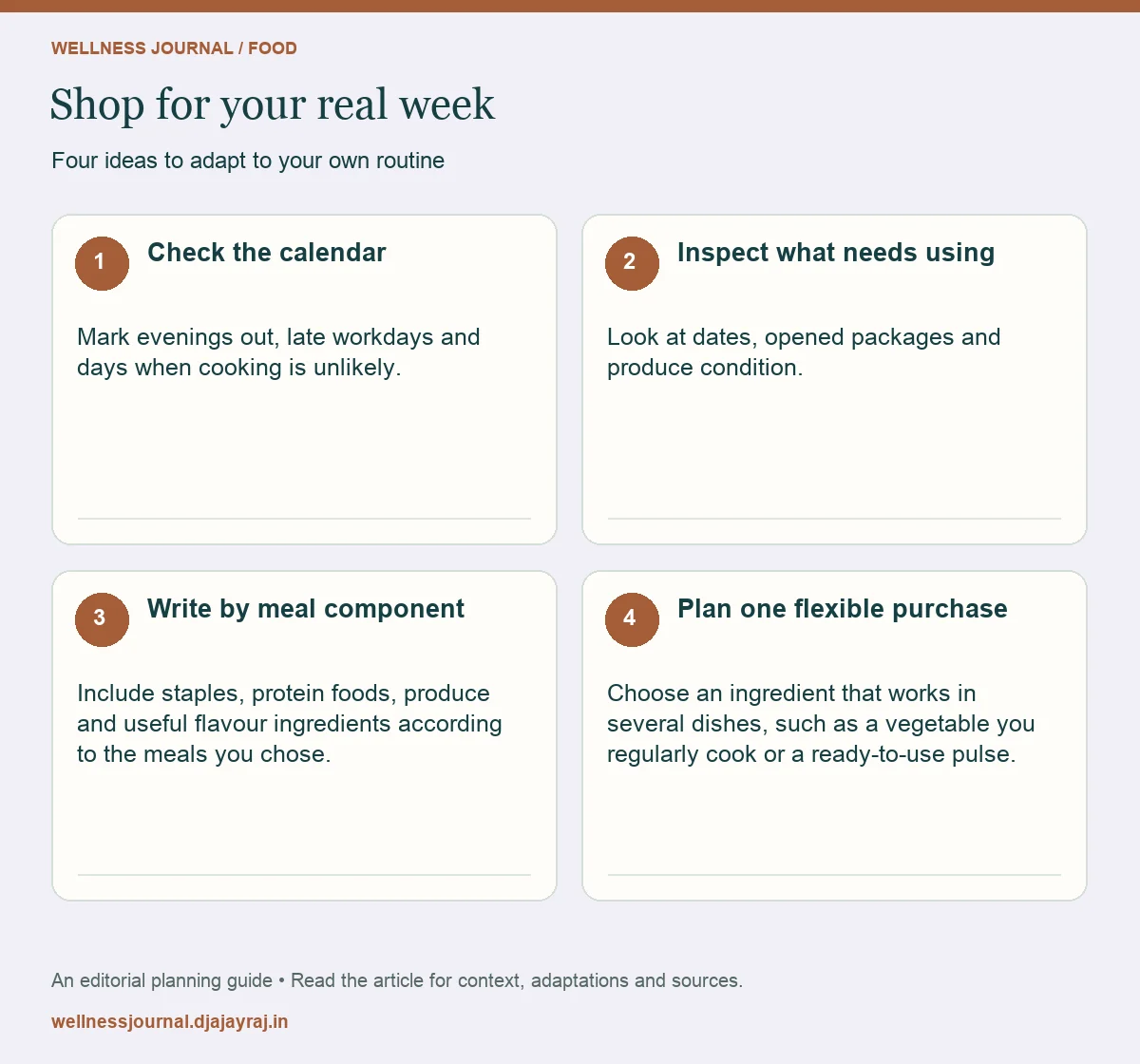
Check the calendar
Mark evenings out, late workdays and days when cooking is unlikely. Plan fewer fresh meals than the number of days if your schedule is unpredictable. Keep a suitable freezer or pantry backup for the gaps.
Inspect what needs using
Look at dates, opened packages and produce condition. Build the first meals around foods that can be used safely soon. Do not buy a replacement simply because an ingredient is usually on your list.
Write by meal component
Include staples, protein foods, produce and useful flavour ingredients according to the meals you chose. Add breakfast and snack needs if relevant. Estimate portions from your actual household appetite rather than a standard photograph.
Plan one flexible purchase
Choose an ingredient that works in several dishes, such as a vegetable you regularly cook or a ready-to-use pulse. This gives you room to adapt without filling the trolley with speculative extras.
Turn a meal idea into a useful list
| Meal idea | Check at home | Buy only what is missing |
|---|---|---|
| Wrap lunch | Wraps, suitable filling, dressing | Produce and needed filling |
| Warm dinner bowl | Staple, beans or other protein | Vegetables and seasoning |
| Quick breakfast | Oats or bread | Preferred partner and fruit |
| Backup dinner | Freezer and pantry options | One versatile missing component |
Make it work for you
Use quantities you can manage
Buying in bulk is not automatically economical if food spoils or storage becomes difficult. Compare unit prices where possible, but also consider how much you can use before the relevant storage limit. Smaller portions can be the better purchase for an unpredictable week. Keep a running list of items you genuinely finish so the next shop reflects real habits.
Leave one unplanned meal slot
Use it for safe leftovers, a pantry meal or a change of plans. A fully scheduled menu can leave no room to use what remains, which is one reason a careful-looking plan still produces waste.
Quick checklist
- Check supplies before shopping.
- Plan realistic portions and storage.
- Leave flexibility for leftovers and changed plans.
Common questions
Should every purchase be on the list?
The list is a guide. A useful seasonal offer can fit if you know how you will use and store it.
Do I need a detailed weekly menu?
No. A few meal directions and a reliable backup may be enough. Choose the level of detail that reduces effort for your household.