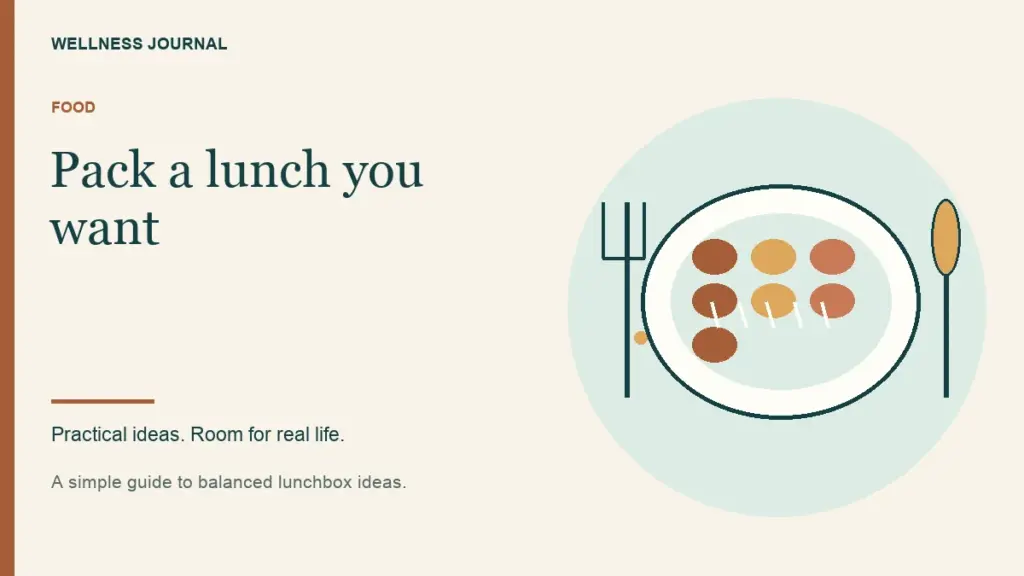
The best balanced lunchbox ideas are the ones you still want to eat when lunchtime arrives. Think about where you will eat, whether you can refrigerate or reheat food and how much assembly is realistic. A beautiful salad is not useful if it leaks in your bag or leaves you hungry. Build a lunch around your actual day.
Start with the eating conditions
Check whether you have a fridge, microwave, clean utensils and a comfortable place to eat. Those details determine which foods travel well. Keep wet dressings separate when texture matters, and choose a container that closes securely. If refrigeration is unavailable, use an appropriate insulated bag and cold packs for perishable foods, following food-safety guidance.
A varied overall diet matters more than a perfect individual meal. Safe storage and cooking are essential parts of food preparation.
Background guidance: NHS: Eating a balanced diet; FoodSafety.gov: Cooking and storage guidance.
Four practical steps
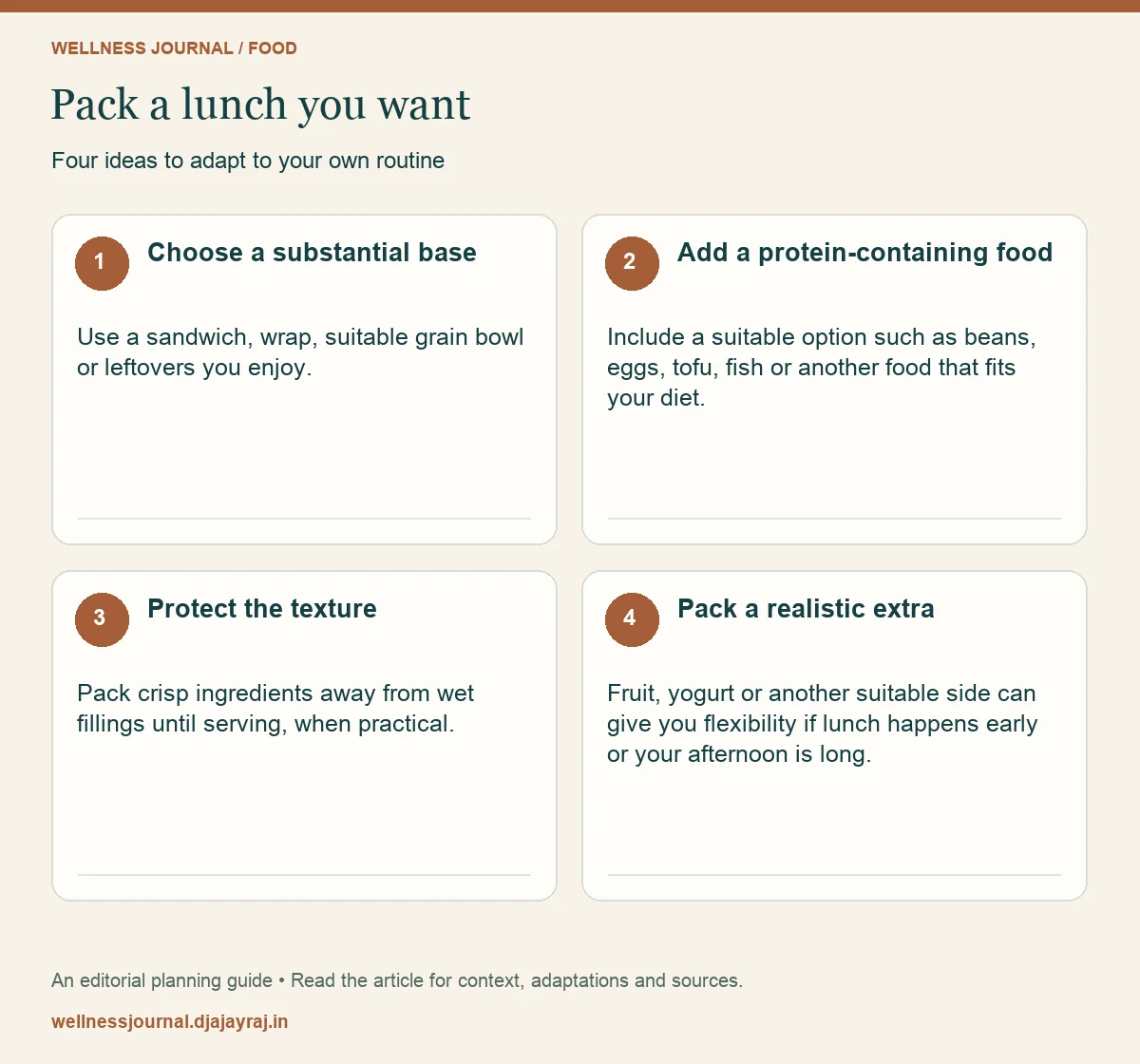
Choose a substantial base
Use a sandwich, wrap, suitable grain bowl or leftovers you enjoy. Adjust the amount to your appetite and the rest of your day. A lunchbox does not have to be small simply because it is portable.
Add a protein-containing food
Include a suitable option such as beans, eggs, tofu, fish or another food that fits your diet. Check storage requirements and allergies. If the lunch is shared or eaten at school or work, follow any relevant food policies.
Protect the texture
Pack crisp ingredients away from wet fillings until serving, when practical. Put sauces in a small sealed container. A simple separation can make the same ingredients much more appealing after several hours.
Pack a realistic extra
Fruit, yogurt or another suitable side can give you flexibility if lunch happens early or your afternoon is long. Choose what you will use rather than filling compartments because the box has space.
Lunch formats for different facilities
| Your setup | Meal direction | Packing detail |
|---|---|---|
| Fridge and microwave | Suitable leftovers | Use a microwave-safe container |
| Fridge only | Wrap or chilled bowl | Keep dressing separate |
| No fridge | Appropriate insulated cold storage | Use cold packs for perishables |
| Very short lunch break | Easy-to-eat components | Avoid complicated assembly |
Make it work for you
Create a two-lunch rotation
Choose one lunch based on leftovers and one based on cupboard ingredients. Keep their shopping lists short and overlapping. For example, vegetables can appear in both a dinner bowl and the next day's wrap, provided they have been stored safely. Rotate a sauce or side when you want variety rather than redesigning the entire lunch every day.
Pack the awkward item at night
Wash the container, portion the dressing or set out the utensils before bed. Leave chilled food in the refrigerator until departure. Reducing one morning bottleneck can make packing much more likely.
Quick checklist
- Keep perishable foods safely chilled.
- Use containers that seal and suit reheating.
- Pack enough food for your own appetite.
Common questions
Can lunch just be a collection of snacks?
It can be a collection of components if it provides enough food and variety for you. Think about the whole meal rather than the name of each item.
Are leftovers automatically safe the next day?
Only if the food was prepared, cooled and stored safely. Follow food-specific guidance and do not rely on smell alone.