A low energy day plan can help you distinguish what must happen from what can wait. It is not a cure for fatigue, depression or another condition. Use it as a practical way to reduce demands while you assess what support you need. If low energy is persistent, unexplained or worsening, seek medical advice rather than repeatedly redesigning your to-do list.
Choose the essentials with care
Consider food, prescribed care, immediate responsibilities and safety. Some tasks can be delayed; others may need help from another person. Avoid assuming that every item on yesterday's list remains equally important today. A smaller day can still contain meaningful care and useful decisions.
Persistent tiredness and low mood can have different causes. Professional assessment may be needed when symptoms continue or affect daily life.
Background guidance: NHS: Tiredness and fatigue; NIMH: Talking with a healthcare provider about mental health.
Four practical steps
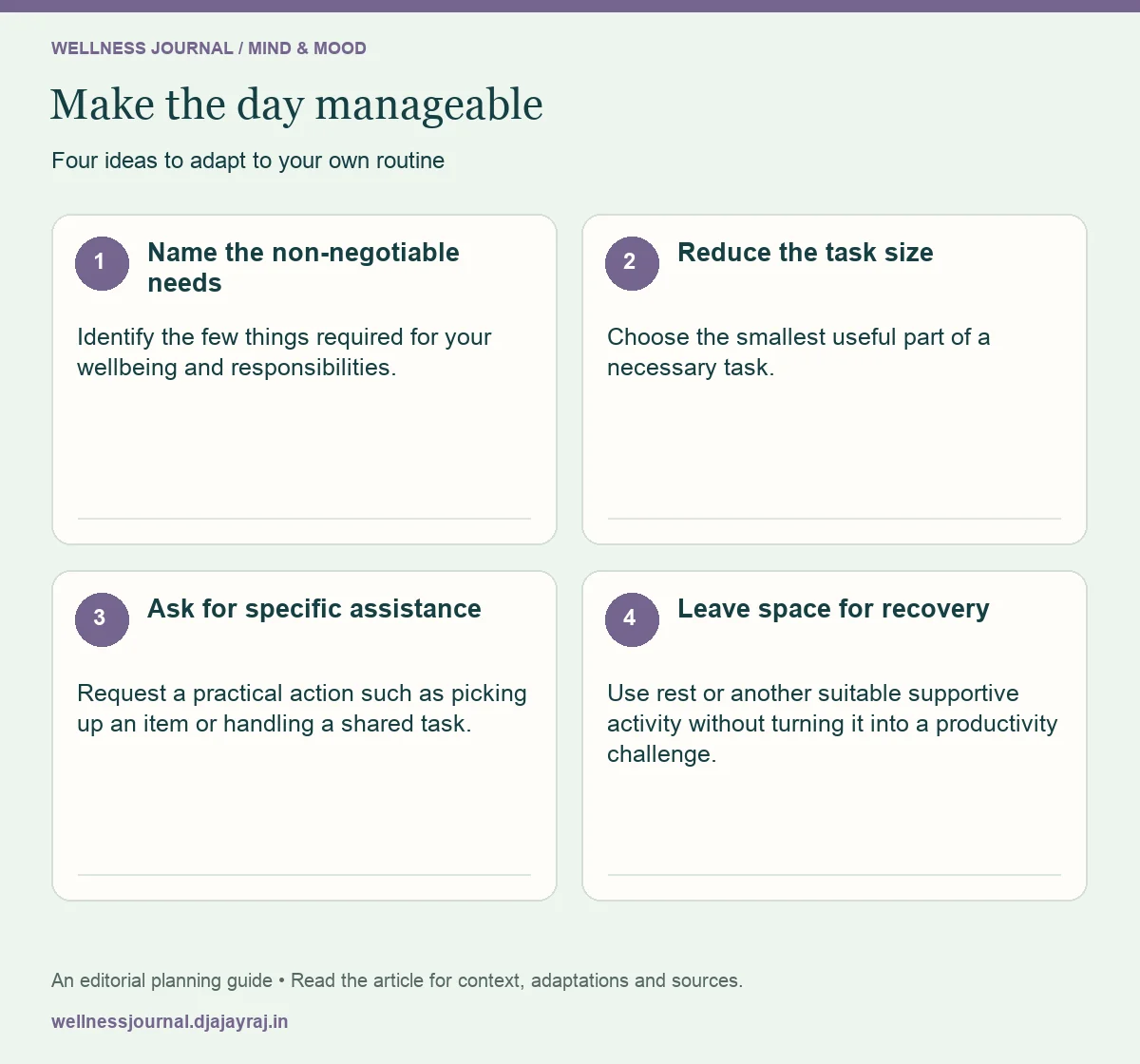
Name the non-negotiable needs
Identify the few things required for your wellbeing and responsibilities. Follow prescribed treatment as directed. If you cannot manage essential care, contact a suitable person or service for help.
Reduce the task size
Choose the smallest useful part of a necessary task. Prepare a simple meal rather than a complicated recipe, or send a short update rather than completing a large project. Do not use the smaller version to hide a need for support.
Ask for specific assistance
Request a practical action such as picking up an item or handling a shared task. Clear requests are easier to answer. You do not need to justify the need with a complete account of your symptoms.
Leave space for recovery
Use rest or another suitable supportive activity without turning it into a productivity challenge. Follow individual medical advice, especially when activity can worsen symptoms. More effort is not always the right response to low energy.
Sort the day by what is needed
| Task group | Question | Possible action |
|---|---|---|
| Essential care | What must be supported today? | Do it or seek help |
| Time-sensitive responsibility | Can someone assist? | Delegate appropriately |
| Optional work | Can this wait? | Delay or reduce |
| Recovery | What is suitable for my condition? | Follow needs and advice |
Make it work for you
Watch for a pattern that needs care
A difficult day is different from weeks of symptoms that interfere with life. Record a few observations if useful and arrange professional support. Seek urgent help for severe physical symptoms or immediate safety concerns. Do not let a gentle planning article become a reason to postpone assessment.
Write a three-item day
Choose one essential care action, one necessary responsibility and one supportive option. The list can be shorter if that is what you can manage.
Quick checklist
- Prioritise essential care.
- Ask for practical help.
- Seek assessment for persistent or concerning symptoms.
Common questions
Should I force myself to exercise?
Not automatically. Suitability depends on the cause of low energy and your health. Follow individual advice and do not push through concerning symptoms.
Is reducing the list giving up?
It can be a sensible adjustment to capacity. The useful question is what support and care the day requires.