Cooking for one can be freeing, but recipes and supermarket packs often assume a larger household. Plan around how much you want to eat and how often you want leftovers. A good solo meal does not need to look like a family dinner divided into four containers. You can combine fresh preparation with suitable frozen, canned and ready-to-eat foods.
Choose ingredients that can change roles
A vegetable can become a side one day and part of a wrap another. A suitable protein food can appear in different formats if stored safely. Think in a few meal directions rather than a rigid seven-day menu. This leaves room for an invitation, a changed appetite or an evening when cooking is not appealing.
Storage limits still apply to small households. A varied diet can be built from simple meals and flexible ingredients rather than large batches.
Background guidance: FoodSafety.gov: Cold food storage chart; NHS: Eating a balanced diet.
Four practical steps
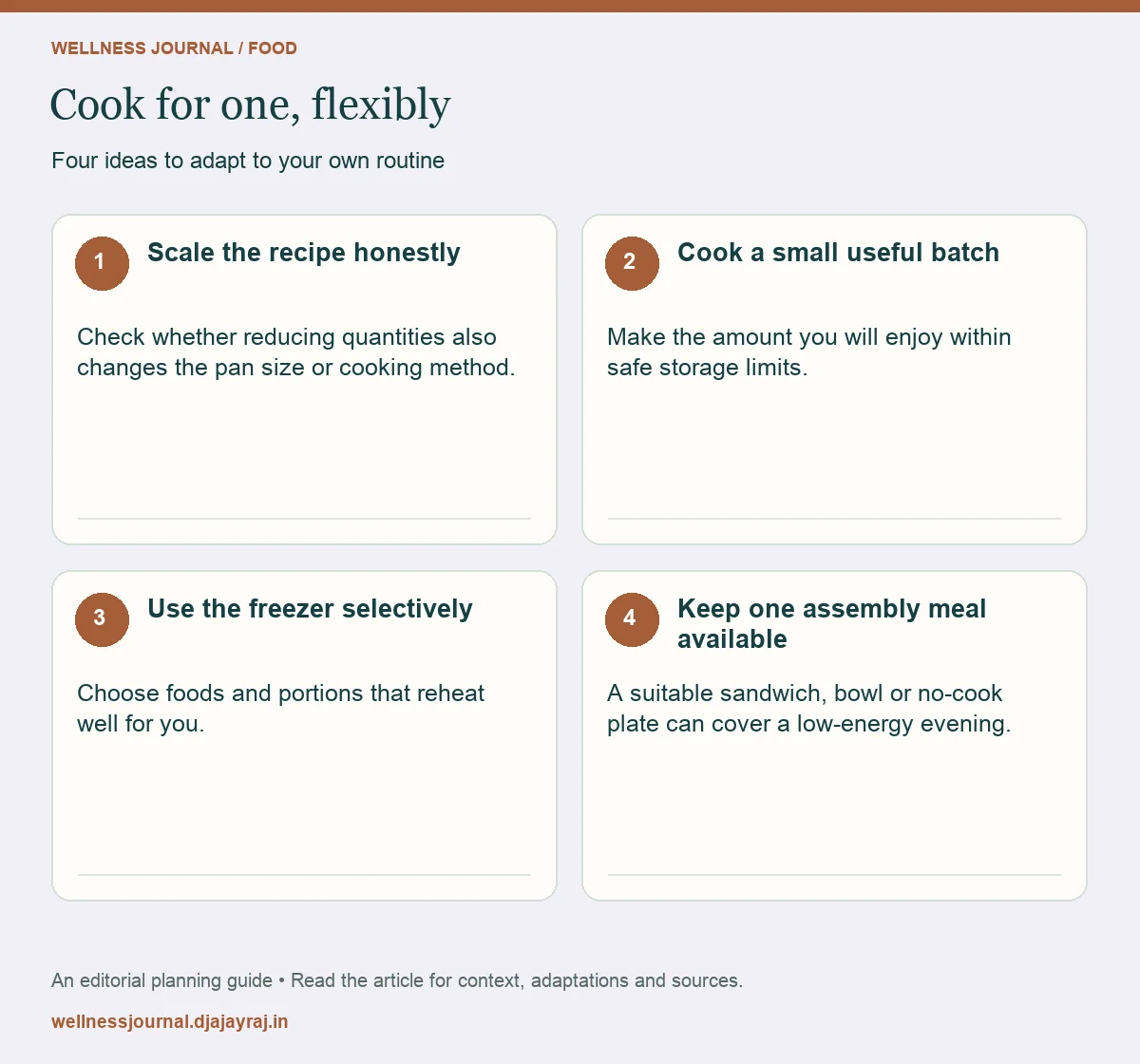
Scale the recipe honestly
Check whether reducing quantities also changes the pan size or cooking method. Some recipes scale easily; others need more care. Use a reliable method rather than assuming every time and temperature remains identical.
Cook a small useful batch
Make the amount you will enjoy within safe storage limits. If you want extra, portion and freeze suitable food promptly. Avoid keeping a large batch in the fridge simply because finishing it would feel responsible.
Use the freezer selectively
Choose foods and portions that reheat well for you. Label the contents and date, and keep a short visible list. A freezer helps only when you can recognise and retrieve what is inside.
Keep one assembly meal available
A suitable sandwich, bowl or no-cook plate can cover a low-energy evening. This backup reduces the pressure to cook from scratch every day and helps you use ingredients before buying more.
A flexible solo-meal pattern
| Meal type | Purpose | Practical choice |
|---|---|---|
| Fresh simple meal | Enjoy cooking today | Small recipe or familiar dish |
| Planned leftover | Save another preparation | Label and chill safely |
| Freezer portion | Cover a later busy day | Freeze suitable food promptly |
| Assembly meal | Reduce effort | Use ready-to-eat components |
Make it work for you
Compare value with waste included
A larger pack may have a lower unit price but still be poor value if you cannot use or freeze it. Smaller packs, loose produce or shared purchases can be sensible. Consider storage space, appetite and the effort of portioning. The cheapest price per kilogram is not always the cheapest food you actually eat.
Plan the second use before buying
If an ingredient comes in a larger amount, name its next meal or freezer destination. If neither is realistic, choose a different size or ingredient.
Quick checklist
- Use portions that fit your appetite.
- Label and store leftovers safely.
- Keep a convenient backup meal.
Common questions
Should I always batch cook?
No. Small fresh meals, partial preparation and freezer options can be equally practical. Choose the pattern you enjoy.
Is it wasteful to buy a smaller pack?
Not if it helps you use the food. Compare the total cost and likely waste, not only the unit price.