Dance at home for beginners can mean moving to one song without memorising choreography. Choose music you enjoy and steps you can stop easily. You do not need to look like an instructor or turn the session into a performance. The aim is a comfortable way to explore movement, with enough space and awareness to avoid trips or awkward turns.
Prepare a small safe dance area
Move cables, bags and slippery rugs, and check footwear against the floor surface. Keep pets and fragile objects out of the immediate area. If balance is a concern, choose supported or seated movement that is appropriate for you. Do not copy spins, jumps or deep bends simply because they appear in a beginner video.
Dance can be a form of physical activity. The effort depends on the movement and pace, so a lively song is not an instruction to work harder.
Background guidance: NHS: Exercise guidance and routines; CDC: Measuring physical activity intensity.
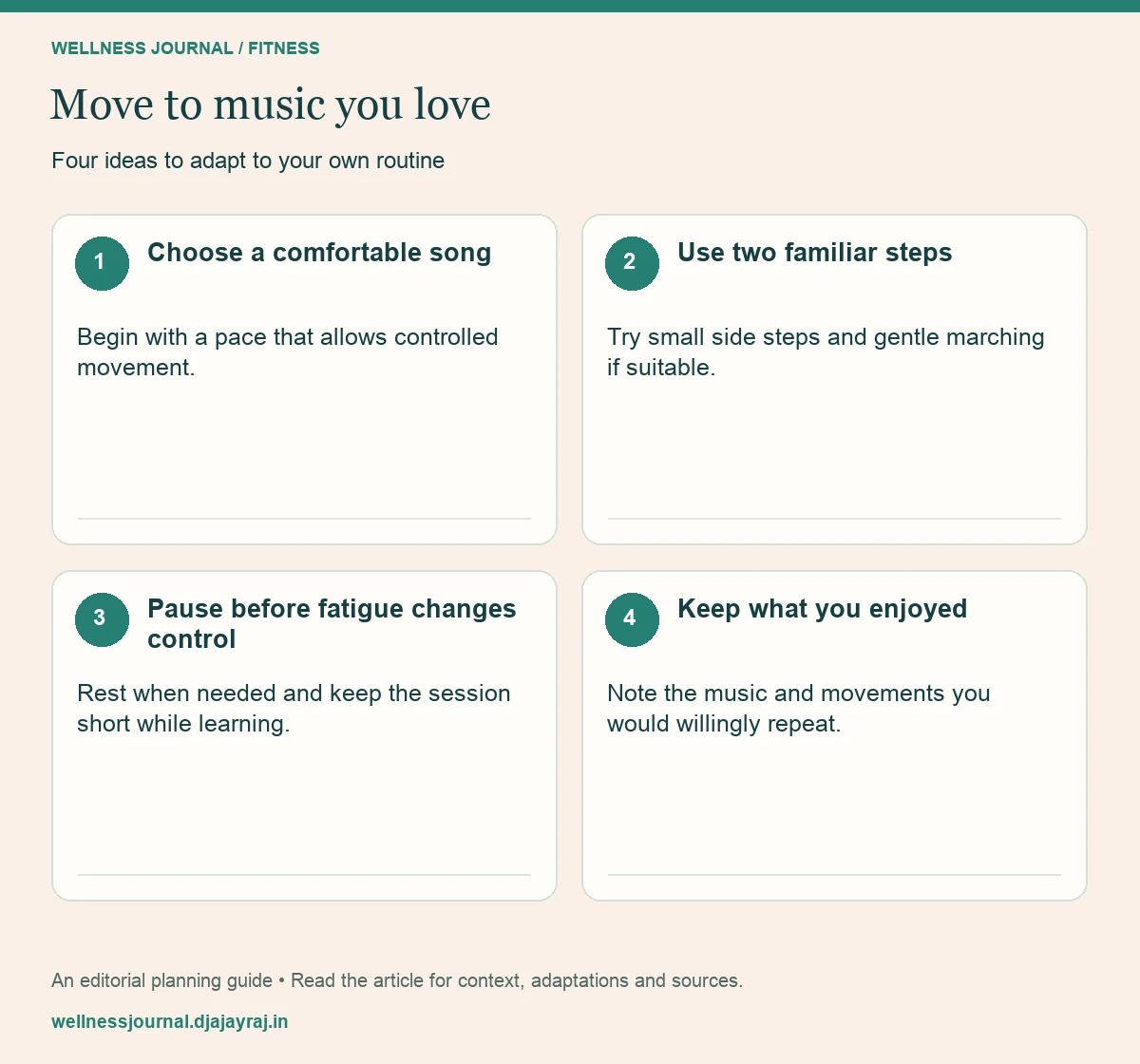
Four practical steps
Choose a comfortable song
Begin with a pace that allows controlled movement. You can move more slowly than the beat. Volume should let you remain aware of your surroundings and should not make the session an unnecessary hearing exposure.
Use two familiar steps
Try small side steps and gentle marching if suitable. Let the arms move comfortably. Repeating a simple pattern leaves more attention for balance and enjoyment than learning several changes at once.
Pause before fatigue changes control
Rest when needed and keep the session short while learning. If the movement becomes rushed or unstable, slow down or stop. You do not have to finish the song to make the session worthwhile.
Keep what you enjoyed
Note the music and movements you would willingly repeat. Add variety later if you want it. Enjoyment is useful information; you do not need to choose the routine that looks most demanding.
Adjust the dance to your setting
| Constraint | Possible adjustment | Avoid |
|---|---|---|
| Small room | Small steps in place | Wide travelling movements |
| Noise-sensitive home | Controlled foot placement | Jumping and stomping |
| Balance concerns | Suitable support or seated options | Rapid turns |
| Low energy | One easy song or part of it | Keeping up at any cost |
Make it work for you
Use videos as menus, not commands
Preview a routine to see whether the movements suit your space and abilities. An instructor cannot see your symptoms or adjust the session personally. Skip unfamiliar movements and seek tailored advice when you have an injury, condition or significant limitation. A simpler version can still be enjoyable.
Make a three-song choice list
Keep one easy, one favourite and one slower finishing song available. Choose according to the day rather than playing a long playlist that pressures you to continue.
Quick checklist
- Clear the floor.
- Keep movement controlled.
- Use your own pace and rest when needed.
Common questions
Do I need rhythm to begin?
No performance standard is required. Simple comfortable movement to music is enough to explore whether you enjoy it.
Is dancing always low impact?
No. Some routines include jumps or demanding moves. Choose the movements and effort that fit you.