To support a friend through a difficult time, you do not need the perfect explanation or a solution for every problem. Start by listening and asking what would be useful. A specific offer can be easier to accept than an open-ended promise. Keep your own limits clear, and recognise situations where professional or emergency help is more appropriate than an ordinary conversation.
Ask what kind of conversation they want
The person may want to talk, sit quietly, solve a practical problem or find care. Avoid assuming advice is the main need. Let them share at their own pace and respect privacy. You can care about someone without asking for details they do not want to disclose.
Supportive relationships can matter during difficult periods. Friends can offer care, while assessment and treatment belong with qualified professionals.
Background guidance: NIH: Social wellness toolkit; NIMH: Talking with a healthcare provider about mental health.
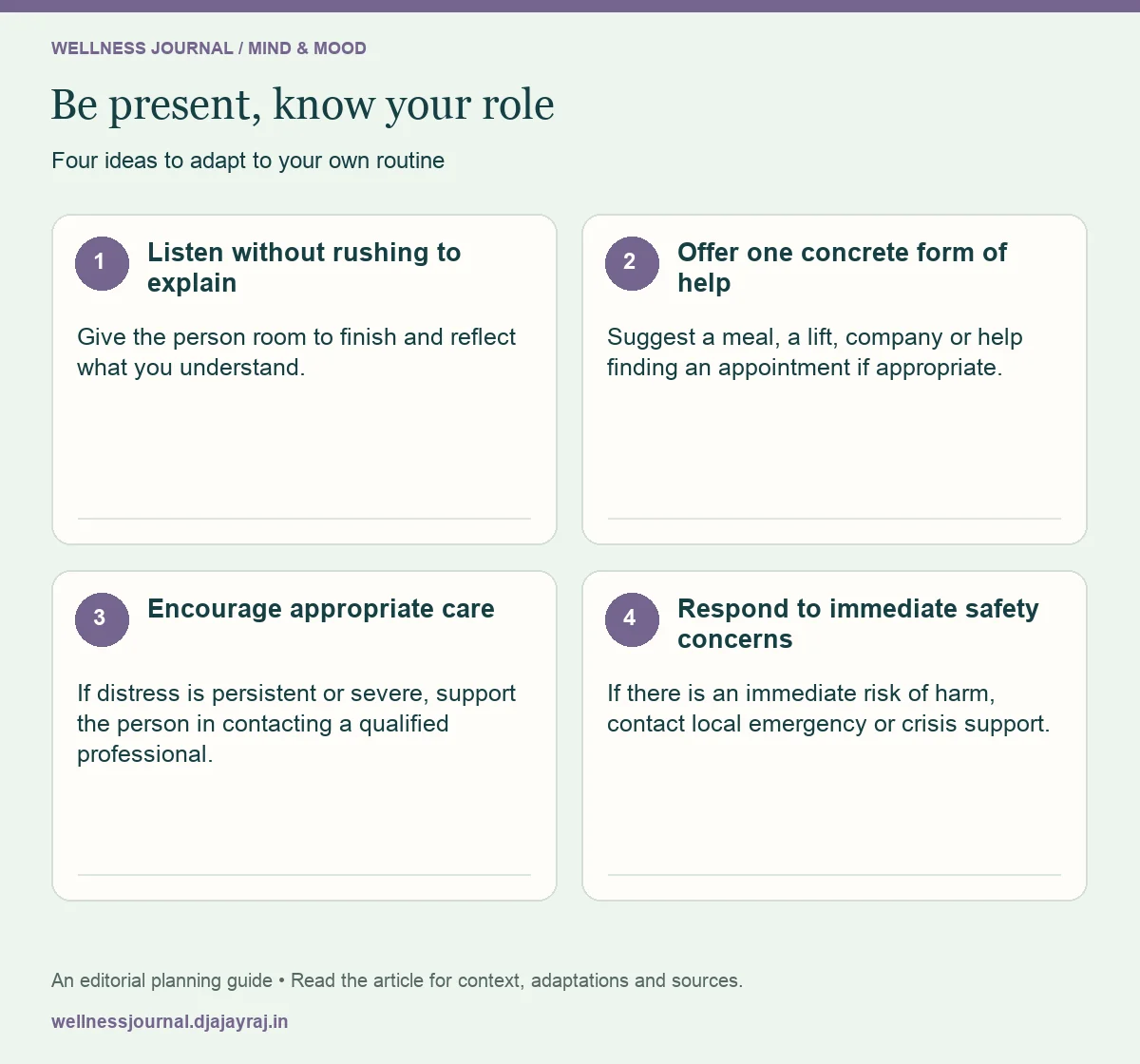
Four practical steps
Listen without rushing to explain
Give the person room to finish and reflect what you understand. Avoid comparing their experience with someone else's or insisting they look on the bright side. You can acknowledge difficulty without claiming to know exactly how it feels.
Offer one concrete form of help
Suggest a meal, a lift, company or help finding an appointment if appropriate. Make the offer realistic. Promising unlimited availability can create expectations you cannot sustain.
Encourage appropriate care
If distress is persistent or severe, support the person in contacting a qualified professional. You can help with logistics without diagnosing them or deciding their treatment.
Respond to immediate safety concerns
If there is an immediate risk of harm, contact local emergency or crisis support. Do not promise secrecy about a serious safety risk. Stay within what you can safely do and follow professional instructions.
Helpful support has a clear shape
| Situation | Useful response | Avoid |
|---|---|---|
| They want to talk | Listen and ask what helps | Instant solutions |
| A task is overwhelming | Offer a specific action | Vague unlimited promises |
| Symptoms persist | Encourage professional care | Diagnosis by friendship |
| Immediate danger | Use emergency support | Waiting for a routine appointment |
Make it work for you
Protect the relationship and your capacity
It is reasonable to say when you are unavailable or need support yourself. Encourage a wider network rather than becoming the only person they can contact. Clear limits can make your help more dependable. If the situation affects your own wellbeing, seek appropriate advice or support too.
Follow up with a specific check-in
Ask whether a planned appointment happened or whether practical help is still useful. Keep the message gentle and allow the person to choose how much to share.
Quick checklist
- Listen before offering advice.
- Make realistic specific offers.
- Use urgent services for immediate danger.
Common questions
What if I say the wrong thing?
You can acknowledge it and return to listening. A respectful, willing presence matters more than a flawless script.
Should I keep every disclosure secret?
Respect privacy, but do not promise secrecy when there is a serious immediate safety risk. Seek appropriate professional help.