Entryway organisation is useful when it helps you find what you need and leave without a last-minute search. You do not need a large hallway or matching storage baskets. Choose a safe place for keys, a bag and the items you repeatedly forget. Keep the doorway usable, especially when the space is shared or someone uses a mobility aid.
Store the essentials, not everything
List the items that leave the house with you most days. Give those a clear home and move occasional-use items elsewhere. A landing place becomes less useful when it collects unopened parcels, old receipts and objects with no next step. Keep the system small enough that returning items takes only a moment.
A visible cue can support a routine, while clear walking routes matter for home safety. Storage should not create new trip hazards.
Background guidance: NIH News in Health: Creating healthy habits; NIA: Preventing falls at home.
Four practical steps
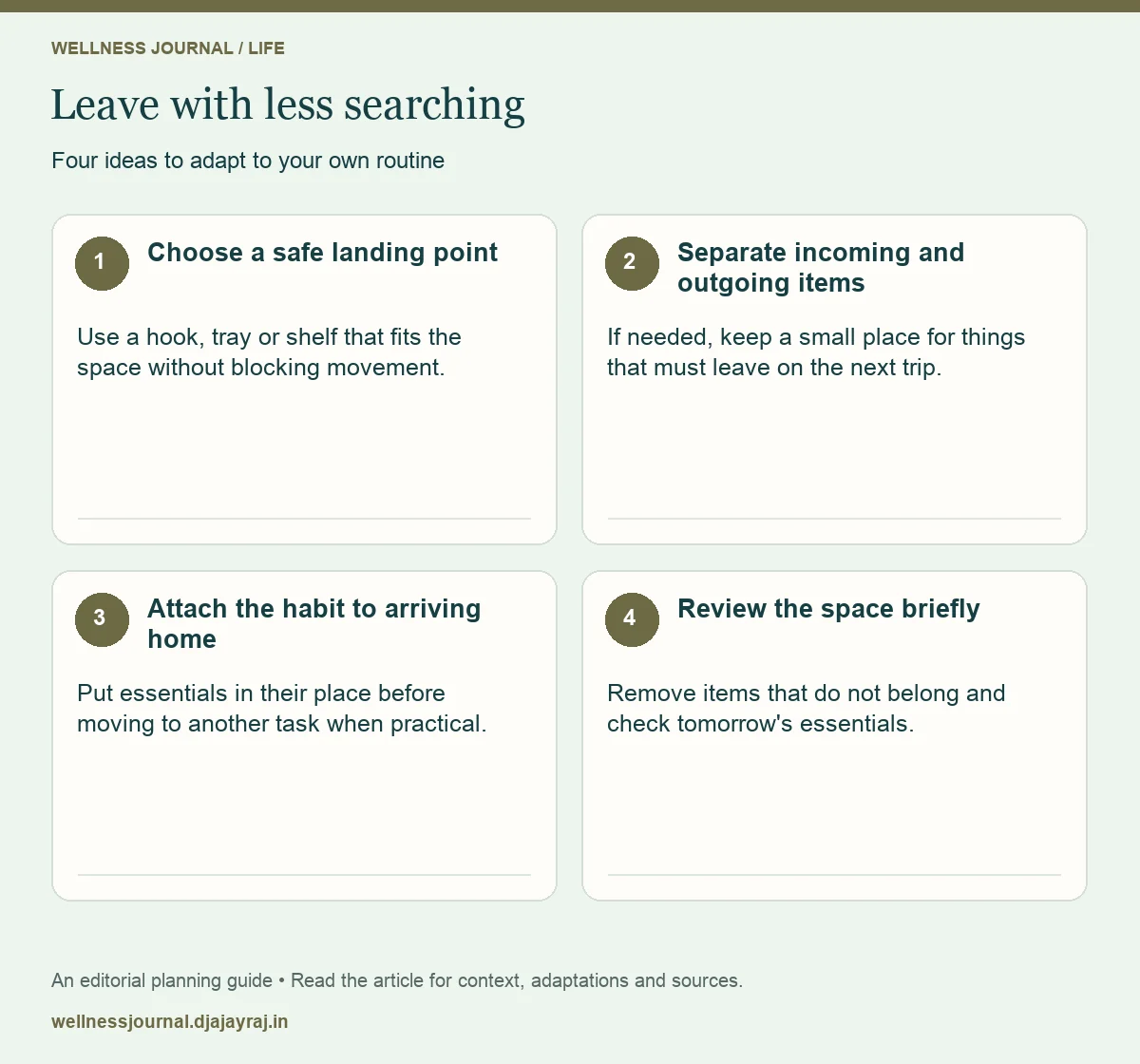
Choose a safe landing point
Use a hook, tray or shelf that fits the space without blocking movement. Keep valuables secure and out of obvious public view. Make the location reachable for the people who use it.
Separate incoming and outgoing items
If needed, keep a small place for things that must leave on the next trip. Do not mix them with long-term storage. A return parcel should have a clear next action rather than becoming permanent furniture.
Attach the habit to arriving home
Put essentials in their place before moving to another task when practical. The cue is the arrival itself. If the location feels inconvenient, change it instead of relying on repeated reminders.
Review the space briefly
Remove items that do not belong and check tomorrow's essentials. Avoid turning the review into a full decluttering project. The purpose is a functional doorway.
Give each item a clear role
| Item type | Storage idea | Useful rule |
|---|---|---|
| Daily essentials | One secure reachable place | Return after use |
| Next-trip items | Small outgoing area | Assign a next action |
| Shoes and bags | Safe designated storage | Keep the route clear |
| Occasional items | Separate storage | Do not crowd the doorway |
Make it work for you
Design for the whole household
Agree on which spaces are shared and which belong to each person. Children or people with access needs may require a different height or format. Avoid moving essential items without telling the person who relies on them. A system is successful when people can use it, not when the area looks empty.
Fix the item you search for most
Start with keys or one other recurring problem. Give it a place and test the arrangement for several days before adding more categories.
Quick checklist
- Keep walking routes clear.
- Store valuables securely.
- Make the location convenient enough to use.
Common questions
Do I need new furniture?
Not necessarily. A suitable existing tray, hook or shelf may solve the problem.
What if people do not use the system?
Check whether the location and rules fit actual behaviour. A simpler or more convenient arrangement may work better.