One-pan dinner ideas can reduce washing up, but the ingredients still need a sensible order. A quick-cooking vegetable and a large piece of raw protein will not necessarily be ready together. Think of the pan as a shared workspace with a sequence. Choose a familiar cooking method and use a food thermometer when the food requires a temperature check.
Group ingredients by cooking time
Decide which ingredient takes longest and which can be added later. Cut vegetables into reasonably consistent pieces so they cook more evenly. Avoid crowding the pan so much that you cannot stir or check the food properly. If a recipe is new to you, follow a reliable tested method instead of estimating cooking times from a photograph.
FoodSafety.gov recommends using safe internal cooking temperatures and appropriate storage. Appearance alone is not a reliable test of doneness.
Background guidance: FoodSafety.gov: Cooking and storage guidance; NHS: Eating a balanced diet.
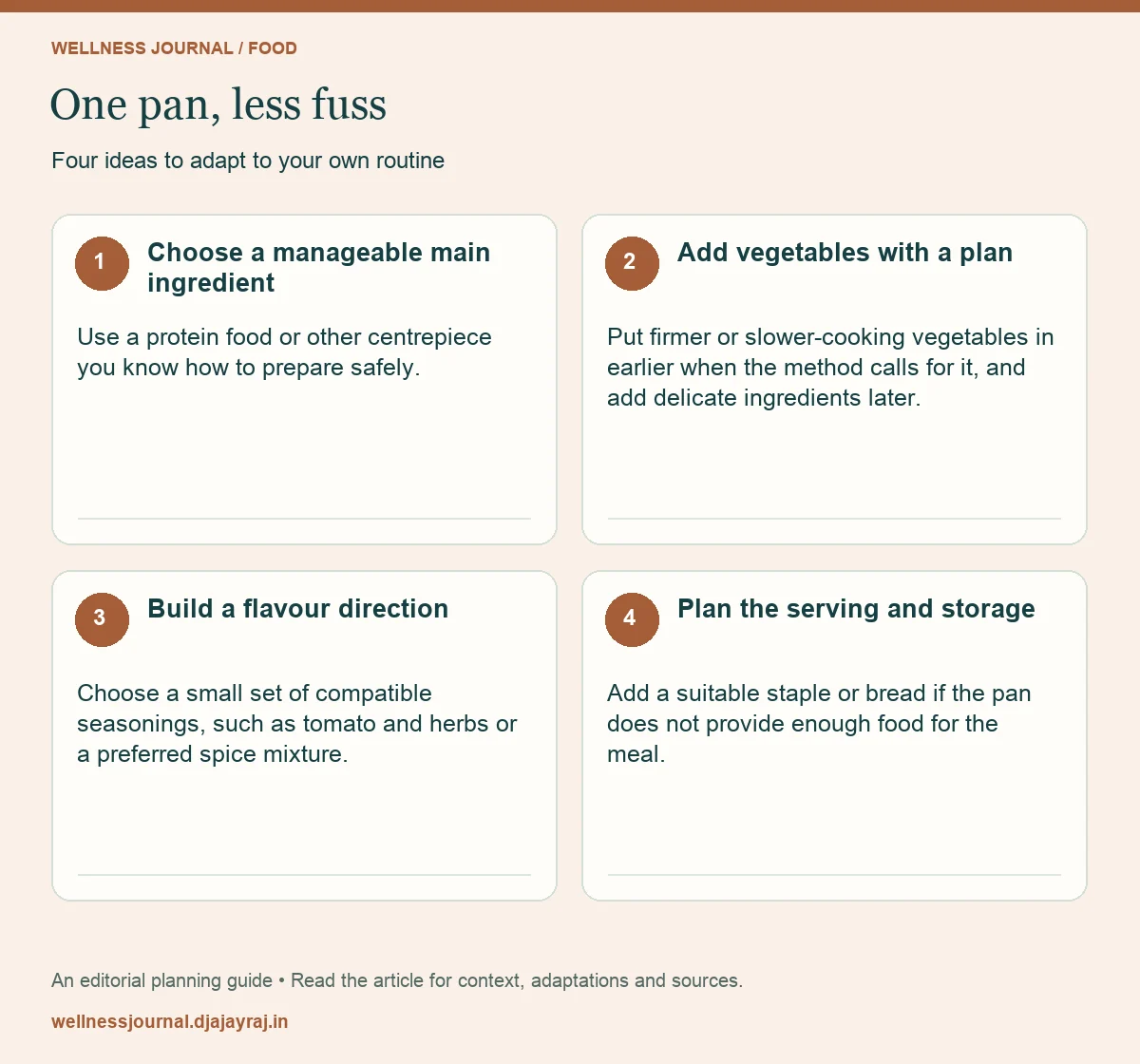
Four practical steps
Choose a manageable main ingredient
Use a protein food or other centrepiece you know how to prepare safely. Ready-cooked pulses can simplify the sequence. If using raw meat, poultry or fish, prevent cross-contamination and follow appropriate cooking guidance.
Add vegetables with a plan
Put firmer or slower-cooking vegetables in earlier when the method calls for it, and add delicate ingredients later. Use similar-sized pieces. Keep a separate side if one ingredient would otherwise become overcooked while another finishes.
Build a flavour direction
Choose a small set of compatible seasonings, such as tomato and herbs or a preferred spice mixture. Add liquids according to the method. Taste safely at an appropriate stage, without using utensils that contacted raw ingredients.
Plan the serving and storage
Add a suitable staple or bread if the pan does not provide enough food for the meal. Portion leftovers promptly using safe cooling and storage practices. Label them so tomorrow's lunch is an intentional plan rather than an unidentified container.
Three meal directions to adapt
| Direction | Possible components | Key planning detail |
|---|---|---|
| Tomato-based skillet | Beans and vegetables | Warm through as directed |
| Tray-style dinner | Suitable protein and vegetables | Match size and cooking times |
| Quick stir-fry | Suitable protein, vegetables, sauce | Prepare ingredients before heat |
| Leftover lunch | Safely stored portion | Reheat appropriately |
Make it work for you
Keep the formula flexible
A one-pan meal is not a competition to use only one utensil. Cook a component separately if that produces a safer or more enjoyable result. The useful outcome is an achievable dinner with manageable cleanup. Portion size, food variety and personal preferences matter more than meeting the name of a cooking trend.
Prepare the sequence on a small note
Write 'first, next, last' beside the ingredients before cooking. This is especially helpful when using unfamiliar vegetables or combining leftovers with fresh components. Keep raw and ready-to-eat items separated.
Quick checklist
- Use a thermometer when required.
- Avoid cross-contamination.
- Store leftovers safely and label them.
Common questions
Can every ingredient go in at once?
No. Different cooking times and safety requirements often need a sequence. Follow a reliable method for the specific foods.
Is one-pan cooking always faster?
Not always. It may mainly reduce washing up. Preparation, chopping and cooking time still depend on the ingredients.