To share household chores more fairly, make the work visible before deciding who does it. A task includes noticing, planning and following through, not only the final physical action. Different households have different capacities and arrangements. The useful goal is a clear agreement that people can discuss, rather than a supposedly perfect split imposed without considering work, disability or caring responsibilities.
List recurring work without assigning blame
Write down the tasks that keep the household functioning, including shopping, appointments, laundry and replenishing supplies. Include the planning that often remains invisible. Keep the first conversation focused on understanding the work. If it becomes a review of every past frustration, pause and return to a smaller concrete decision.
Supportive relationships and clear priorities are part of wellbeing guidance. The task system here is an organising example, not a relationship therapy method.
Background guidance: NIH: Social wellness toolkit; NIMH: Caring for your mental health.
Four practical steps
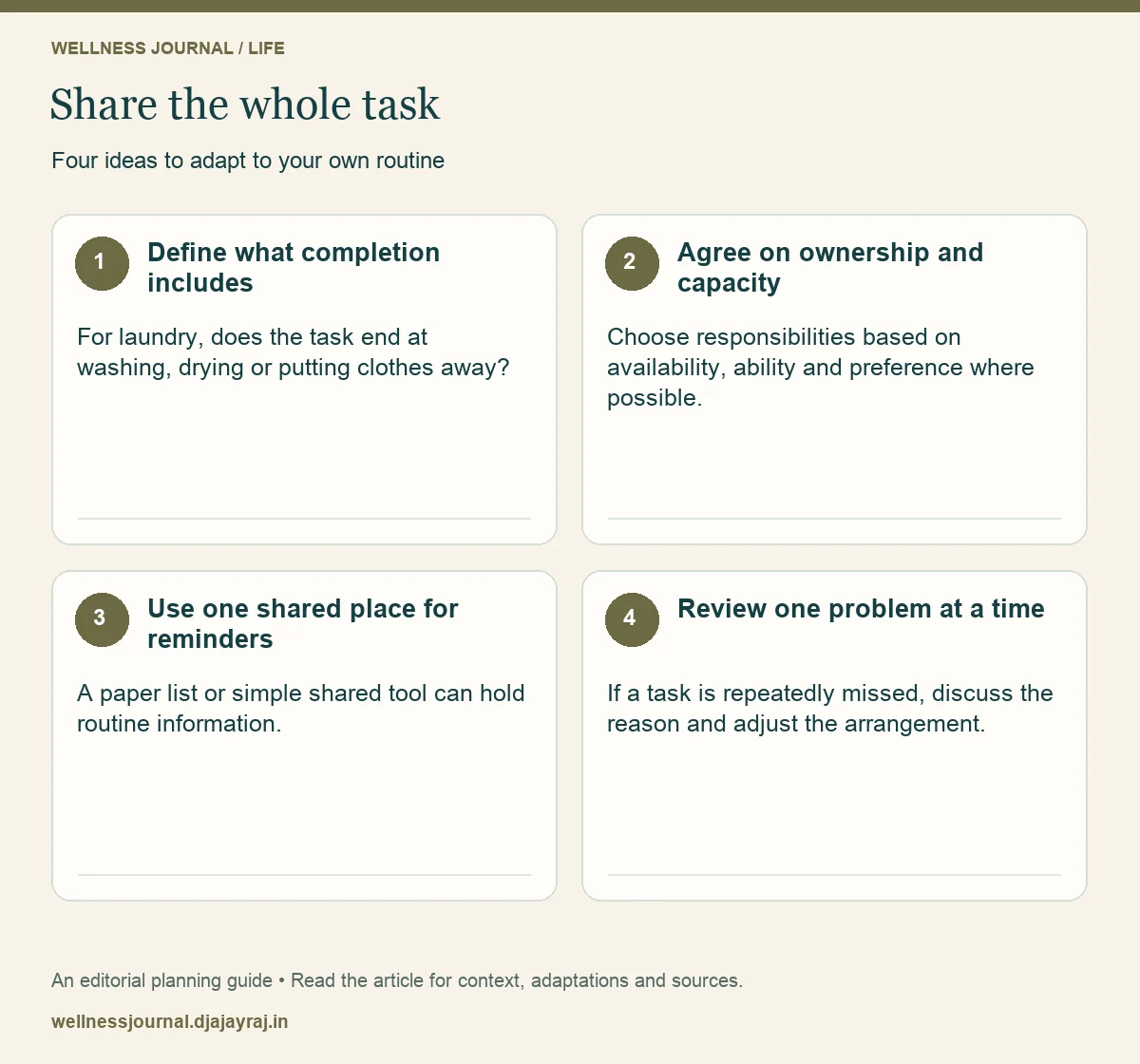
Define what completion includes
For laundry, does the task end at washing, drying or putting clothes away? For groceries, who checks supplies and makes the list? Clear definitions reduce repeated misunderstandings and make the actual responsibility easier to share.
Agree on ownership and capacity
Choose responsibilities based on availability, ability and preference where possible. Ownership should include remembering the task, not waiting for instructions. A fair arrangement may change during illness, intense work periods or other life changes.
Use one shared place for reminders
A paper list or simple shared tool can hold routine information. Keep it easy to update. Avoid a complex system that one person must maintain on everyone else's behalf, recreating the same imbalance in a new form.
Review one problem at a time
If a task is repeatedly missed, discuss the reason and adjust the arrangement. Perhaps the standard is unclear or the timing is unrealistic. Keep the review specific rather than turning a missed bin collection into a judgement of character.
Define the whole task
| Task | Often hidden work | Clear completion |
|---|---|---|
| Groceries | Checking supplies and planning | Food bought and stored |
| Laundry | Noticing need and timing loads | Clothes ready to use |
| Appointments | Booking and remembering details | Visit and follow-up handled |
| Cleaning supplies | Monitoring what runs out | Suitable supplies available |
Make it work for you
Make room for different standards
Discuss which standards are necessary for hygiene and safety and which are preferences. A shared agreement may involve compromise, but it should not dismiss genuine access or health needs. If conflict feels unsafe or involves coercion, a chore chart is not the solution; seek appropriate support. Ordinary planning tools work best where people can negotiate respectfully.
Start with one recurring frustration
Choose a task everyone recognises and agree on its owner, timing and finish. Test that agreement before redesigning the whole household. One clear improvement can show what the system needs.
Quick checklist
- Include noticing and planning work.
- Agree on a clear finish.
- Review capacity when circumstances change.
Common questions
Does fair always mean exactly equal?
Not necessarily. Capacity, time and needs differ. The important point is an arrangement people can understand and discuss respectfully.
Should one person be the household manager?
Only if that role is explicitly agreed and valued. Otherwise, a system can accidentally leave one person responsible for reminding everyone.