Mindfulness for beginners does not have to begin with a long silent sitting session. You can explore attention while washing a cup, walking comfortably or listening to a familiar sound. The practice is to notice what is happening and gently return when attention wanders. It is not a test of whether you can empty your mind or remain calm on command.
Choose an ordinary activity with a clear boundary
Pick something brief and safe that you already do. Avoid practising in situations that need full vigilance, such as driving or crossing a road. Decide what you will notice: the feel of water, the sound of footsteps or the texture of an object. Keep the practice small enough that you can stop easily if it feels uncomfortable.
Mindfulness involves attention to the present. NCCIH notes that experiences vary and that meditation should not replace conventional care.
Background guidance: NHS: Mindfulness; NCCIH: Meditation and mindfulness evidence and safety.
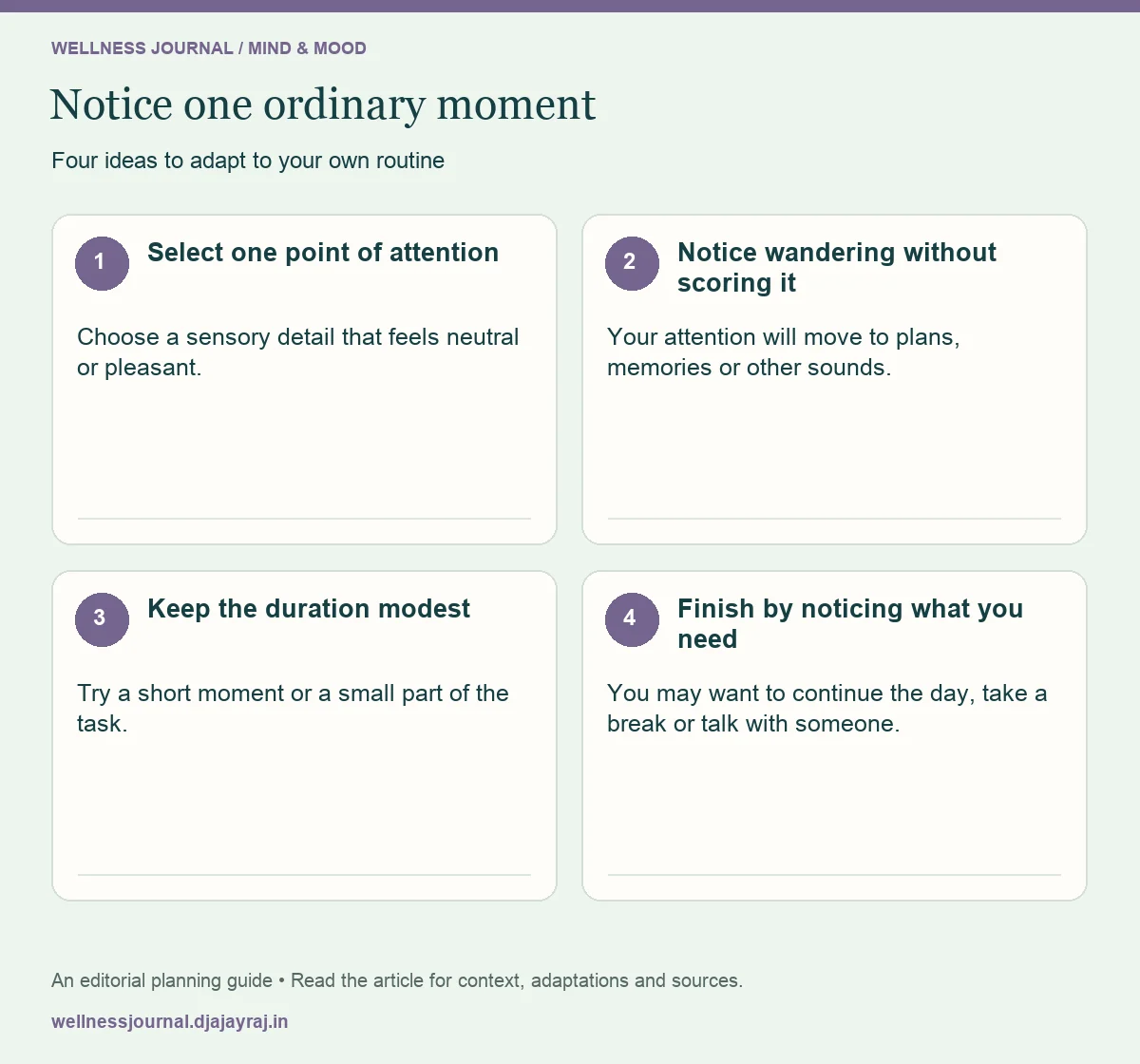
Four practical steps
Select one point of attention
Choose a sensory detail that feels neutral or pleasant. It can be outside your body if internal sensations are uncomfortable. You do not have to focus on breathing simply because that is a common instruction.
Notice wandering without scoring it
Your attention will move to plans, memories or other sounds. Recognise that movement and return to the chosen detail if you want. Wandering is part of the experience, not evidence that you are doing the practice incorrectly.
Keep the duration modest
Try a short moment or a small part of the task. Longer is not automatically better. If you feel anxious, detached or distressed, stop and return to an ordinary supportive activity.
Finish by noticing what you need
You may want to continue the day, take a break or talk with someone. The practice does not have to produce a special feeling. It can simply help you notice the present situation before choosing the next action.
Choose an accessible attention practice
| Activity | Possible focus | Keep in mind |
|---|---|---|
| Washing a cup | Temperature and touch | Use safe water temperature |
| Comfortable walk | Footsteps or surroundings | Stay aware of hazards |
| Listening | One ordinary sound | Avoid forcing concentration |
| Holding an object | Texture and weight | Choose something neutral |
Make it work for you
Respect your response to the practice
Mindfulness is not enjoyable or helpful for everyone in every circumstance. People with trauma histories or significant symptoms may prefer guidance from a qualified professional. You can choose a different coping tool, keep your eyes open or focus externally. Do not use the practice to postpone needed medical or mental-health care.
Try one mindful sip
Notice the cup, temperature and taste of a suitable drink, then continue normally. This is an invitation to attention, not a rule about how every meal or drink must be experienced.
Quick checklist
- Choose a safe, ordinary activity.
- Keep the practice optional.
- Stop if distress increases and seek support when needed.
Common questions
Do I need to clear my mind?
No. Thoughts can be present. The practice is noticing and returning attention, not creating a blank mind.
Is mindfulness always relaxing?
No. Experiences vary, and some people find it uncomfortable. Adapt or stop rather than forcing a particular result.