Learning how to read food labels is easier when you begin with one question. You might want to compare salt in two soups, check an allergen or understand how much a package contains. You do not need to rank every food with a single good-or-bad score. Labels are tools for specific decisions, and formats differ between countries.
Compare like with like
Choose two similar foods and compare the same amount. One package may show values per serving while another also shows values per 100 grams. A smaller stated serving can make a number look lower without changing the food. Check the unit before deciding that one product is the better fit for your needs.
The FDA explains that a serving size on a US Nutrition Facts label is not a recommendation of how much to eat.
Background guidance: FDA: Understanding the Nutrition Facts label; NHS: Eating a balanced diet.
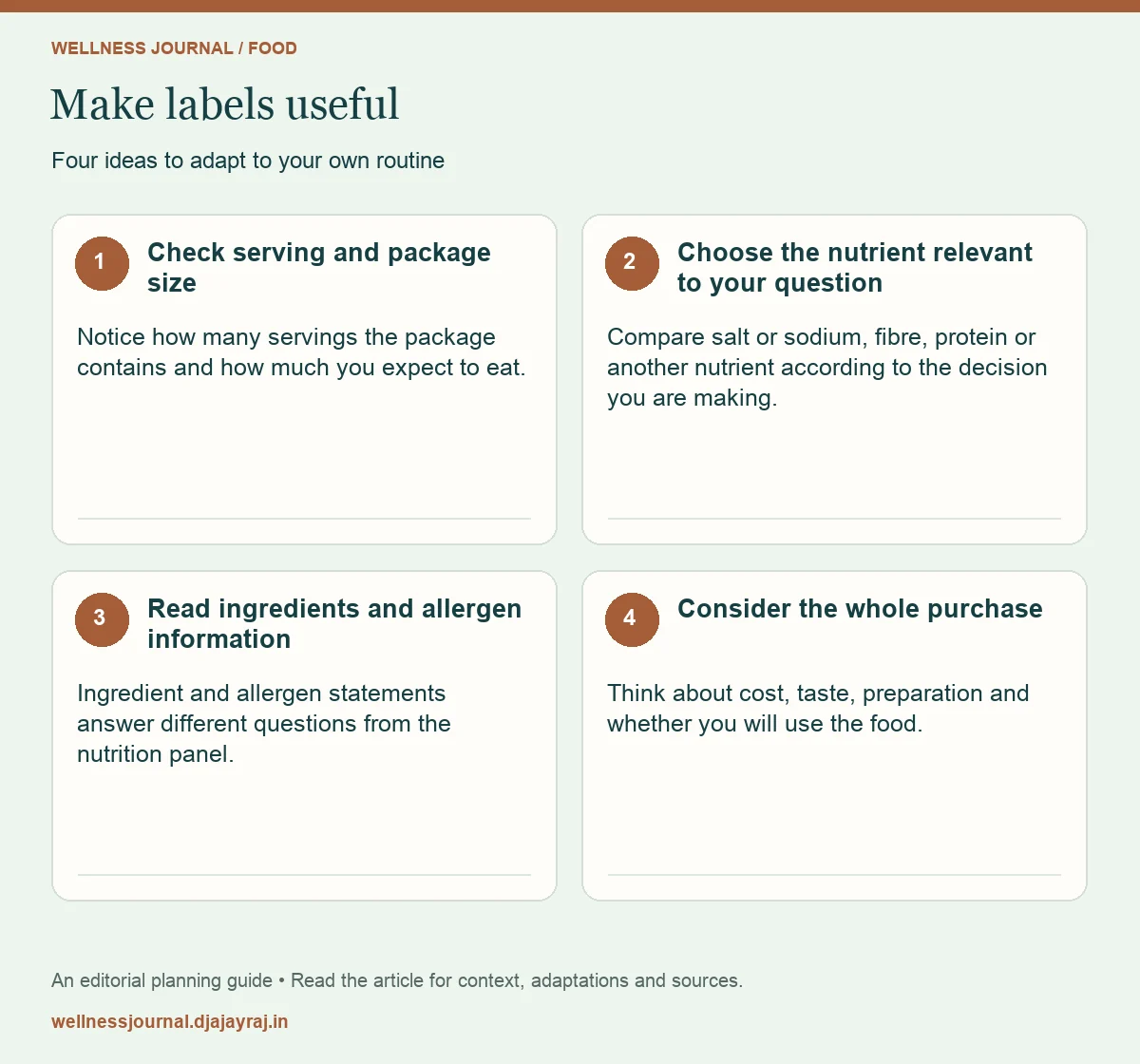
Four practical steps
Check serving and package size
Notice how many servings the package contains and how much you expect to eat. If you use more than the stated serving, the listed nutrient amounts will change accordingly. The printed serving is a reference point, not a personal instruction.
Choose the nutrient relevant to your question
Compare salt or sodium, fibre, protein or another nutrient according to the decision you are making. Do not let a large claim on the front replace the detailed panel. Medical dietary restrictions require more specific advice.
Read ingredients and allergen information
Ingredient and allergen statements answer different questions from the nutrition panel. Check the actual package each time if you have an allergy, because recipes can change. Follow your clinician's guidance about precautionary allergen statements.
Consider the whole purchase
Think about cost, taste, preparation and whether you will use the food. A product with a slightly different number may not be a better choice if it does not fit your meals. The overall eating pattern remains important.
A quick label-reading sequence
| Question | Where to look | Common trap |
|---|---|---|
| How much is listed? | Serving size and units | Comparing different amounts |
| What matters for my goal? | Relevant nutrient line | Following only a front claim |
| Is it suitable for my allergy? | Ingredients and allergen statement | Assuming an old recipe is unchanged |
| Will I use it? | Pack size and storage directions | Buying more than you need |
Make it work for you
Understand percentage guides in context
US labels use percentage Daily Values as a general reference; other countries use different systems. These guides are not a personalised prescription. A person's needs can differ with age, health and other circumstances. When following a clinical eating plan, ask which label information matters most so you can focus on the relevant details.
Practise with one regular purchase
Use a food you buy often, such as bread, cereal or soup. Compare two options once, note what matters and move on. You do not need to turn every shopping trip into a full nutritional audit.
Quick checklist
- Use equal amounts for comparisons.
- Read the current package for allergens.
- Keep taste, budget and practical use in the decision.
Common questions
Does a short ingredient list mean healthier?
Not automatically. Ingredient count alone does not describe nutritional value, suitability or safety for a particular person.
Are all label systems the same?
No. Units, daily-value guides and required information differ by country. Use the explanation that matches the package you are reading.