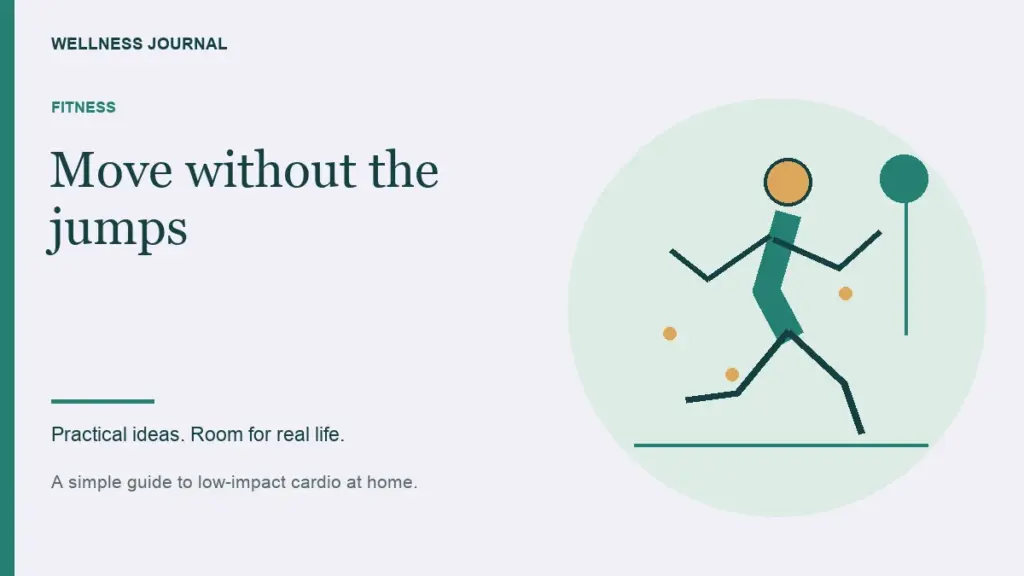
Low-impact cardio at home can be useful when you prefer quieter movement or do not enjoy jumping. It does not mean that every routine is gentle enough for every body. Begin with movements you already tolerate, keep the floor clear and choose a pace that leaves you in control. The following menu lets you assemble a session instead of following a rigid challenge.
Pick two movements you can repeat comfortably
Marching in place and side steps are straightforward options if standing movement suits you. Keep the steps small and use a wall or stable support if needed. Seated marching or comfortable upper-body movement may be alternatives, although the effort will differ. Leave out deep bends, rapid turns or overhead reaches if they cause pain or dizziness.
The CDC uses the talk test to describe exercise intensity. Low-impact movement can still feel demanding depending on pace and individual fitness.
Background guidance: CDC: Measuring physical activity intensity; NHS: Exercise guidance and routines.
Four practical steps
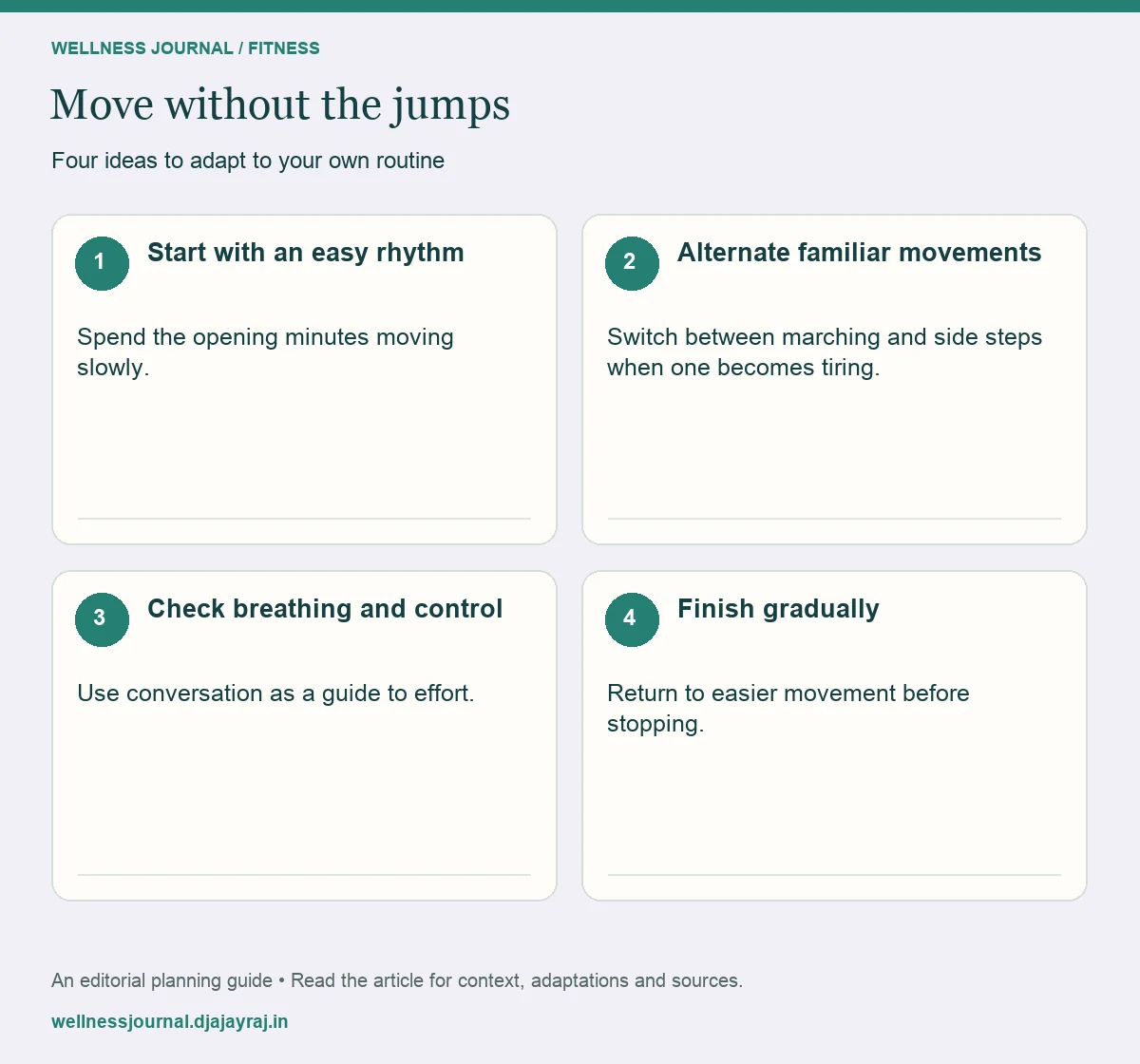
Start with an easy rhythm
Spend the opening minutes moving slowly. Notice the floor surface, footwear and available space. You should be able to stop promptly without losing balance. Music can be enjoyable, but do not let its tempo dictate a pace that feels rushed.
Alternate familiar movements
Switch between marching and side steps when one becomes tiring. Let the arms move naturally rather than adding complicated choreography. You can also pause completely; an interval does not have to be continuous to count as practice.
Check breathing and control
Use conversation as a guide to effort. If you cannot speak comfortably at the intended pace, slow down. Movement quality matters more than keeping up with a video instructor whose fitness and range of motion may differ from yours.
Finish gradually
Return to easier movement before stopping. Notice how you feel over the next several hours. Use that information to decide whether the next session should be shorter, similar or a little longer.
A mix-and-match movement menu
| Option | Make it easier | Avoid |
|---|---|---|
| Marching | Lower knee lift | Rushing or stomping |
| Side steps | Narrower steps | Crossing feet if unstable |
| Heel taps | Smaller reach | Leaning too far backward |
| Seated movement | Comfortable range | An unstable chair |
Make it work for you
Set a short trial, not a challenge
Try a few minutes of selected movements, with rests whenever you need them. A short trial helps you learn which options suit your joints and balance. Low impact describes how you contact the ground; it does not guarantee low strain or make a session suitable after an injury. Get tailored advice if you have symptoms, significant limitations or uncertainty about exercise.
For a noisy upstairs flat
Use controlled foot placement and avoid bouncing. A secure exercise mat may help comfort, but check that its edges cannot catch your feet. Choose a different floor area if the surface feels slippery.
Quick checklist
- Keep a clear stopping space.
- Use an effort level you can manage.
- Stop for pain, faintness or unusual breathing symptoms.
Common questions
Can low-impact cardio be vigorous?
Yes. Impact and intensity are different. A fast routine can be demanding without jumps, so use your breathing and control to guide the pace.
Is this enough for a complete fitness plan?
It can contribute to aerobic activity. A broader plan may also include strength, balance and other movement suited to your needs.