Budget meal prep works best when it reduces waste and decisions, not when it fills your fridge with identical boxes you stop wanting by Wednesday. Prepare a few flexible components and give them different flavours when you serve them. Start with two or three meals you actually expect to eat at home. Buying for an imaginary perfect week can cost more than improvising.
Plan around what needs using
Check the fridge, freezer and cupboard before writing a shopping list. Choose a vegetable that needs using, a staple you already own and a convenient protein source. Build meals around those ingredients. Compare prices by a consistent unit when possible, and avoid a larger pack if you cannot store or use the extra safely.
FoodSafety.gov lists many cooked leftovers at three to four days in a refrigerator at 4°C or below; individual foods have their own limits.
Background guidance: FoodSafety.gov: Cold food storage chart; FoodSafety.gov: Cooking and storage guidance.
Four practical steps
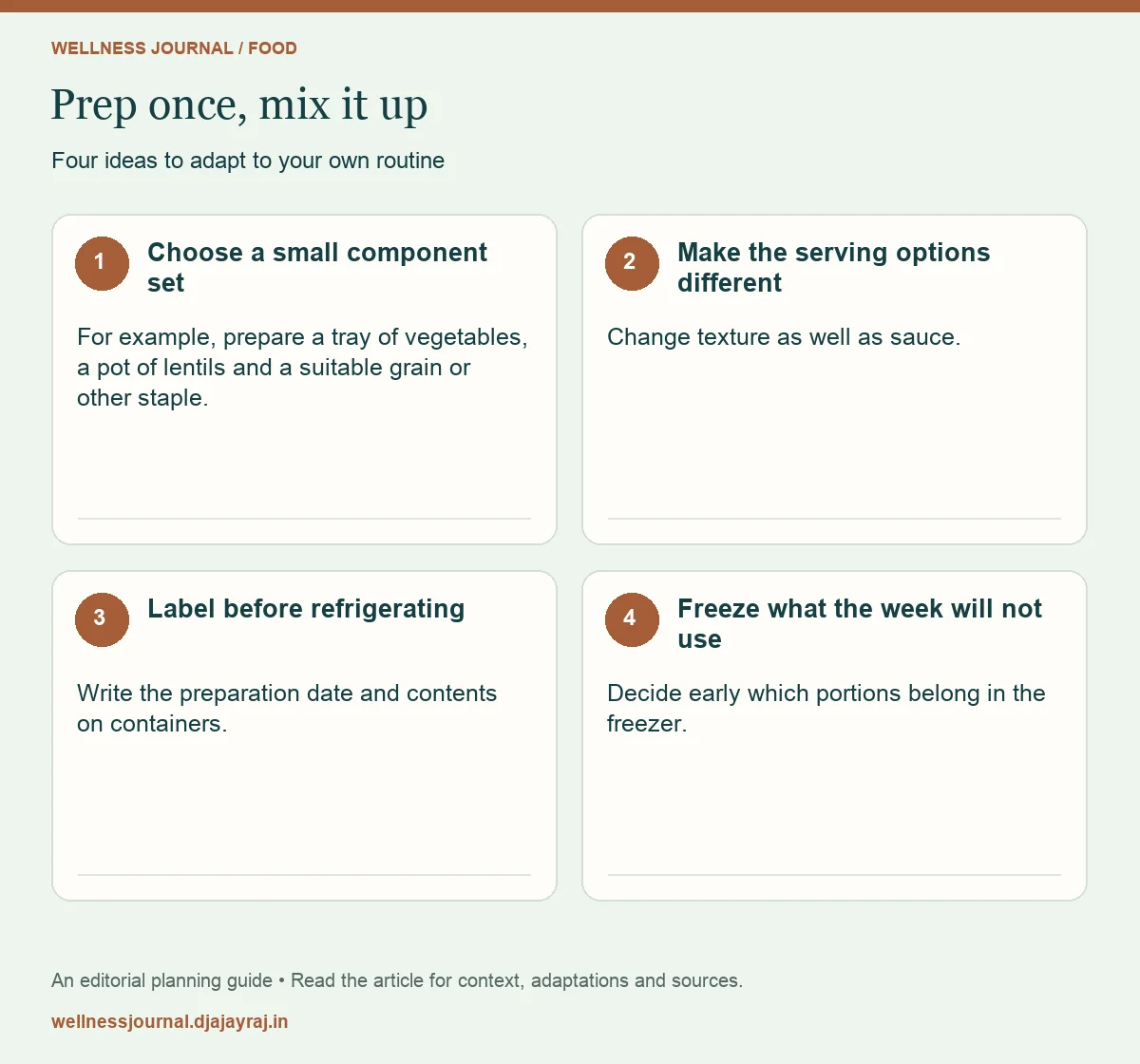
Choose a small component set
For example, prepare a tray of vegetables, a pot of lentils and a suitable grain or other staple. Keep some flavouring separate so the same components can become a warm bowl, a wrap or a soup.
Make the serving options different
Change texture as well as sauce. Use a crisp salad element in one meal and a warm broth in another. A different garnish alone may not make an identical box feel like a different dinner.
Label before refrigerating
Write the preparation date and contents on containers. Portion food into suitable shallow containers and follow safe cooling and storage guidance. Do not leave a large pot out for hours while waiting for it to become completely cold.
Freeze what the week will not use
Decide early which portions belong in the freezer. Freezing is not a way to rescue food that has already been stored unsafely. Label frozen portions clearly so they remain useful rather than becoming an unidentified collection.
One component, several meal directions
| Prepared component | First use | Second use |
|---|---|---|
| Cooked lentils | Warm bowl with vegetables | Soup with a different seasoning |
| Roasted vegetables | Wrap filling | Side for an easy dinner |
| Washed salad ingredients | Lunch bowl | Sandwich accompaniment |
| Suitable cooked staple | Main meal base | Portioned freezer backup |
Make it work for you
Count portions honestly
If you often change dinner plans, prepare fewer refrigerated portions and keep a flexible freezer option. Include the cost of containers, sauces and ingredients bought only for one recipe when assessing savings. A cheaper meal that is repeatedly discarded is not a good value. The best plan fits your actual appetite, storage space and schedule.
Use a visible eat-first area
Place labelled food that needs using sooner where you can see it, while keeping raw foods safely separated. Check dates before combining leftovers. Adding fresh ingredients does not reset the age of the older food.
Quick checklist
- Keep the refrigerator at a safe temperature.
- Check food-specific storage guidance.
- Reheat appropriately and avoid repeated unsafe cooling cycles.
Common questions
Can I refrigerate a full week's cooked meals?
Do not assume every cooked meal is safe for seven days. Follow food-specific guidance and freeze appropriate portions earlier.
What if I dislike leftovers?
Prep ingredients or sauces rather than complete meals. You can still save chopping and decision time while cooking a fresh combination.