The first goal of strength training at home is to learn movements you can control. It is not to make every muscle ache. Set aside a small, uncluttered area and choose a few movements that suit your current ability. This guide explains a cautious starter structure for generally healthy adults; it is not rehabilitation or an individual exercise prescription.
Choose movements with an easy exit
A stable chair against a wall and a clear section of wall can make a first session less intimidating. Avoid wheeled chairs, improvised overhead anchors and furniture that can slide. Start with easier versions so you can concentrate on a smooth movement and normal breathing. If a movement causes joint pain, leave it out rather than forcing the range.
Muscle-strengthening activity is part of adult activity guidance. Body weight and resistance bands can provide resistance; a gym is not essential.
Background guidance: NHS: Strength and flexibility; CDC: Adult activity guidelines.
Four practical steps
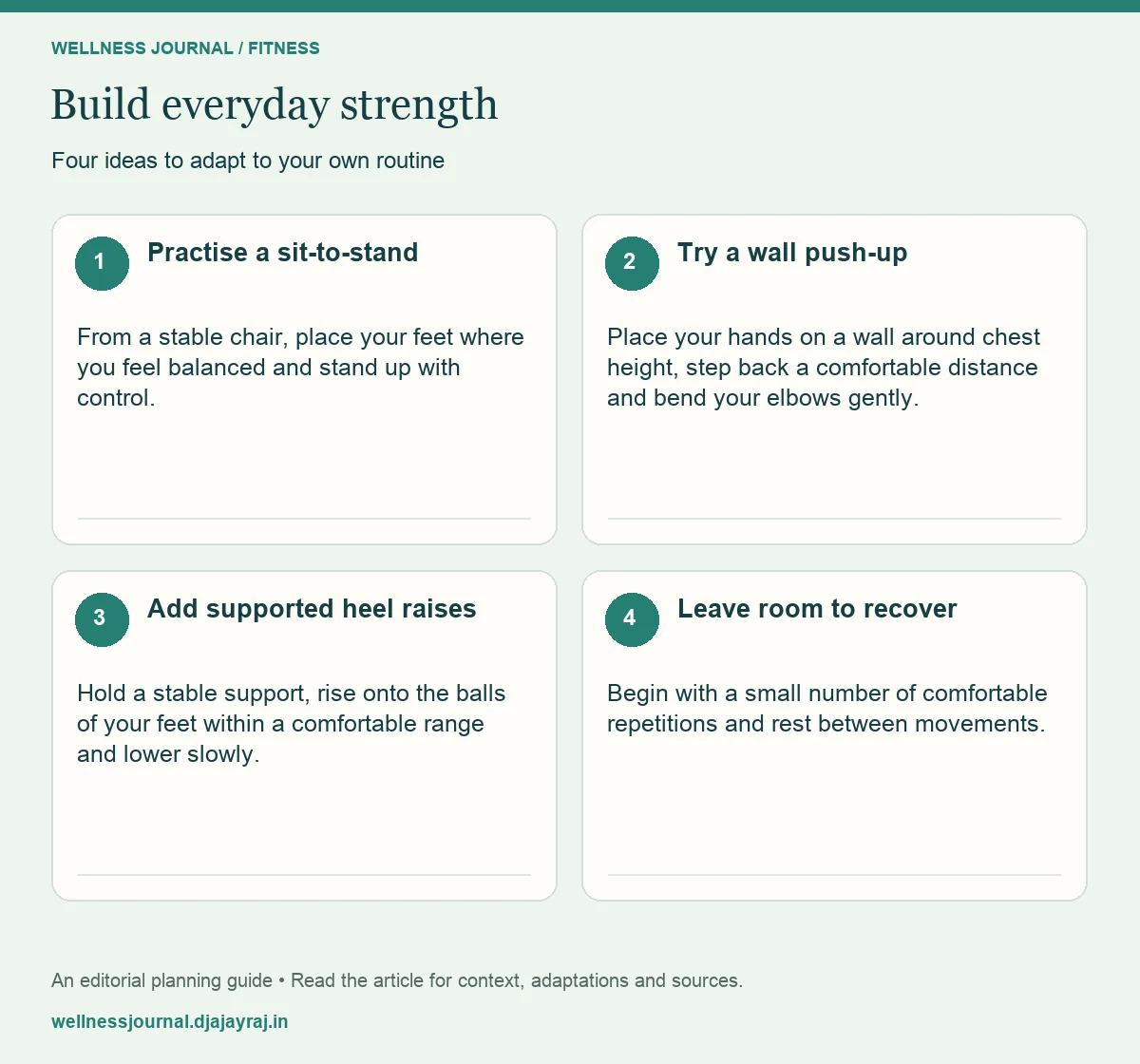
Practise a sit-to-stand
From a stable chair, place your feet where you feel balanced and stand up with control. Use your hands if you need them. Sit back down gently. Choose a chair height that allows the movement without straining or collapsing into the seat.
Try a wall push-up
Place your hands on a wall around chest height, step back a comfortable distance and bend your elbows gently. Press back without holding your breath. Standing closer makes the movement easier; keep the distance modest while learning.
Add supported heel raises
Hold a stable support, rise onto the balls of your feet within a comfortable range and lower slowly. Keep the movement controlled. Stop if you feel unstable, and avoid balancing on a step edge during your first sessions.
Leave room to recover
Begin with a small number of comfortable repetitions and rest between movements. Finish while your technique still feels steady. Record the version you used so the next session starts from a known, manageable level.
A starter session checklist
| Movement | Easier option | What to notice |
|---|---|---|
| Sit-to-stand | Higher stable seat; hands for support | Controlled return to sitting |
| Wall push-up | Stand closer to wall | Comfortable wrists and shoulders |
| Heel raise | Both hands on stable support | Slow lowering |
| Between movements | Longer rest | Breathing settles |
Make it work for you
Progress one feature at a time
When the same routine feels comfortable across several sessions, consider one modest change: another repetition, a slower controlled lowering or a slightly more challenging angle. Avoid adding all three together. This short introduction does not cover every major muscle group; a qualified trainer or physiotherapist can help you build a balanced programme, especially if you have pain, disability or a long-term condition.
Keep a useful training note
Write the exercise version, repetitions and any discomfort. A precise note such as 'wall push-up felt comfortable; wrists tired afterward' gives you something to adjust. Soreness is not a score of workout quality.
Quick checklist
- Warm up with easy movement.
- Use stable support and keep breathing.
- Stop sharp pain, dizziness or chest discomfort; seek care when needed.
Common questions
Do I need dumbbells?
No. Learning supported body-weight movements is a reasonable starting point. Equipment becomes useful when it fits your ability and you know how to use it safely.
Can I train the same muscles every day?
Beginners generally benefit from recovery between harder sessions. Use your comfort and professional advice to plan frequency rather than repeating a demanding routine daily.