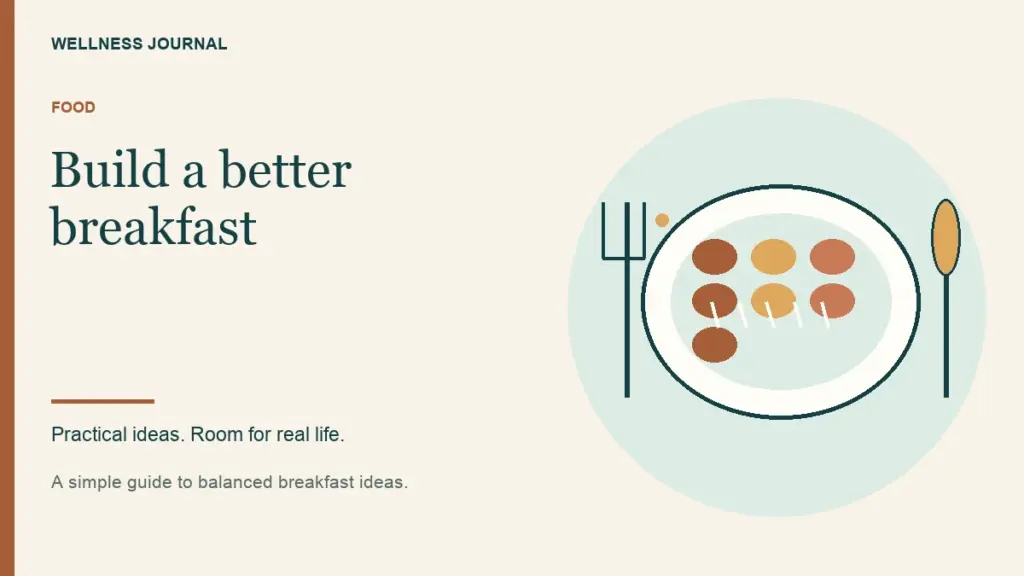
A balanced breakfast does not need a fashionable ingredient or a complicated recipe. Start with foods you enjoy and can keep available, then add variety over the week. These balanced breakfast ideas are a planning tool, not a rule about when you must eat. Appetite, culture, work hours and medical needs all influence what a useful first meal looks like.
Think in components, not perfect plates
Choose a base such as oats, toast or another familiar staple. Add a protein-containing food and some fruit or vegetables when practical. Include flavour so the meal is appealing: cinnamon, herbs, spices or a favourite condiment can make simple ingredients feel intentional. The portion should suit your appetite and needs rather than an arbitrary photograph.
NHS balanced-diet guidance includes starchy foods, protein sources, fruit and vegetables. Balance is considered across the overall diet, not demanded from every meal.
Background guidance: NHS: Eating a balanced diet; FDA: Understanding the Nutrition Facts label.
Four practical steps
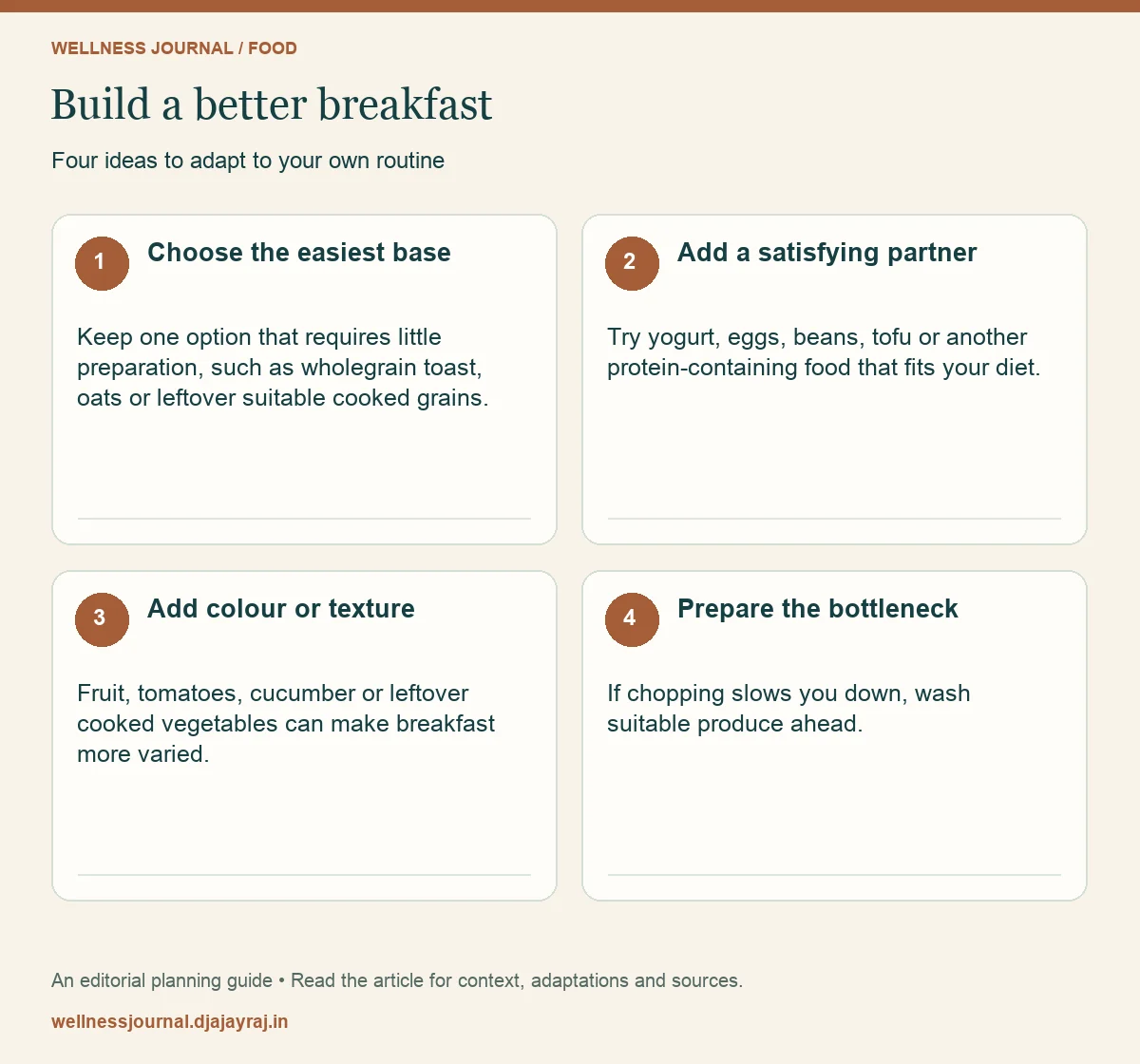
Choose the easiest base
Keep one option that requires little preparation, such as wholegrain toast, oats or leftover suitable cooked grains. Pick a food you already like. Buying an unfamiliar cereal in bulk is not helpful if you never want to eat it.
Add a satisfying partner
Try yogurt, eggs, beans, tofu or another protein-containing food that fits your diet. Check allergies and product labels. Plant-based alternatives vary, so compare their protein and fortification rather than assuming every drink or yogurt is equivalent.
Add colour or texture
Fruit, tomatoes, cucumber or leftover cooked vegetables can make breakfast more varied. Frozen fruit can be useful when fresh produce is expensive; follow its package preparation instructions. Nuts or seeds add texture if they are suitable for you.
Prepare the bottleneck
If chopping slows you down, wash suitable produce ahead. If decisions are the obstacle, write two breakfast combinations on the fridge. Preparing one difficult step is often more useful than making a different recipe every morning.
Four combinations to rotate
| Base | Partner | Finishing touch |
|---|---|---|
| Oats | Plain yogurt or suitable alternative | Fruit and cinnamon |
| Wholegrain toast | Egg or beans | Tomato and herbs |
| Flatbread | Tofu or leftover lentils | Cucumber and chutney |
| Breakfast bowl | Milk or fortified alternative | Fruit and suitable nuts |
Make it work for you
Plan a portable version
Choose a container that seals and keep perishable ingredients safely chilled during travel. A breakfast that needs careful assembly may be awkward on a crowded commute; pack components separately if that helps. If your morning appetite is small, a smaller meal followed by another eating opportunity can be more comfortable than forcing a large portion.
For mornings with almost no preparation time
Keep one shelf-stable base and one easy refrigerated partner available. Decide the combination the night before. The backup should be something you would willingly eat, not an emergency food you dislike.
Quick checklist
- Choose portions for your appetite.
- Check allergens and alternative-product labels.
- Keep perishable food chilled.
Common questions
Is breakfast compulsory?
Eating patterns differ. If you feel well with a different schedule, a general breakfast formula does not override that. Follow individual advice for medical conditions or medication timing.
Does every breakfast need fruit?
No single meal has to contain every food group. Use the formula flexibly and aim for variety across your overall eating pattern.