A self care menu gives you a few options when deciding what would help feels difficult. It is not a list you must complete. Include ordinary practical care, enjoyable activities and ways to reach support. Different days need different choices, and some problems require changes to circumstances or professional help rather than another personal routine.
Organise by effort and need
A long bath may be pleasant but impossible during a busy workday. A brief meal, a message to a friend or preparing for sleep may be more useful. Think about what is available in your real environment. Keep the menu small enough that it reduces decisions rather than adding another large document to maintain.
Self-care is individual and can support wellbeing. It does not replace treatment or solve every source of distress.
Background guidance: NIMH: Caring for your mental health; NIH: Emotional wellness toolkit.
Four practical steps
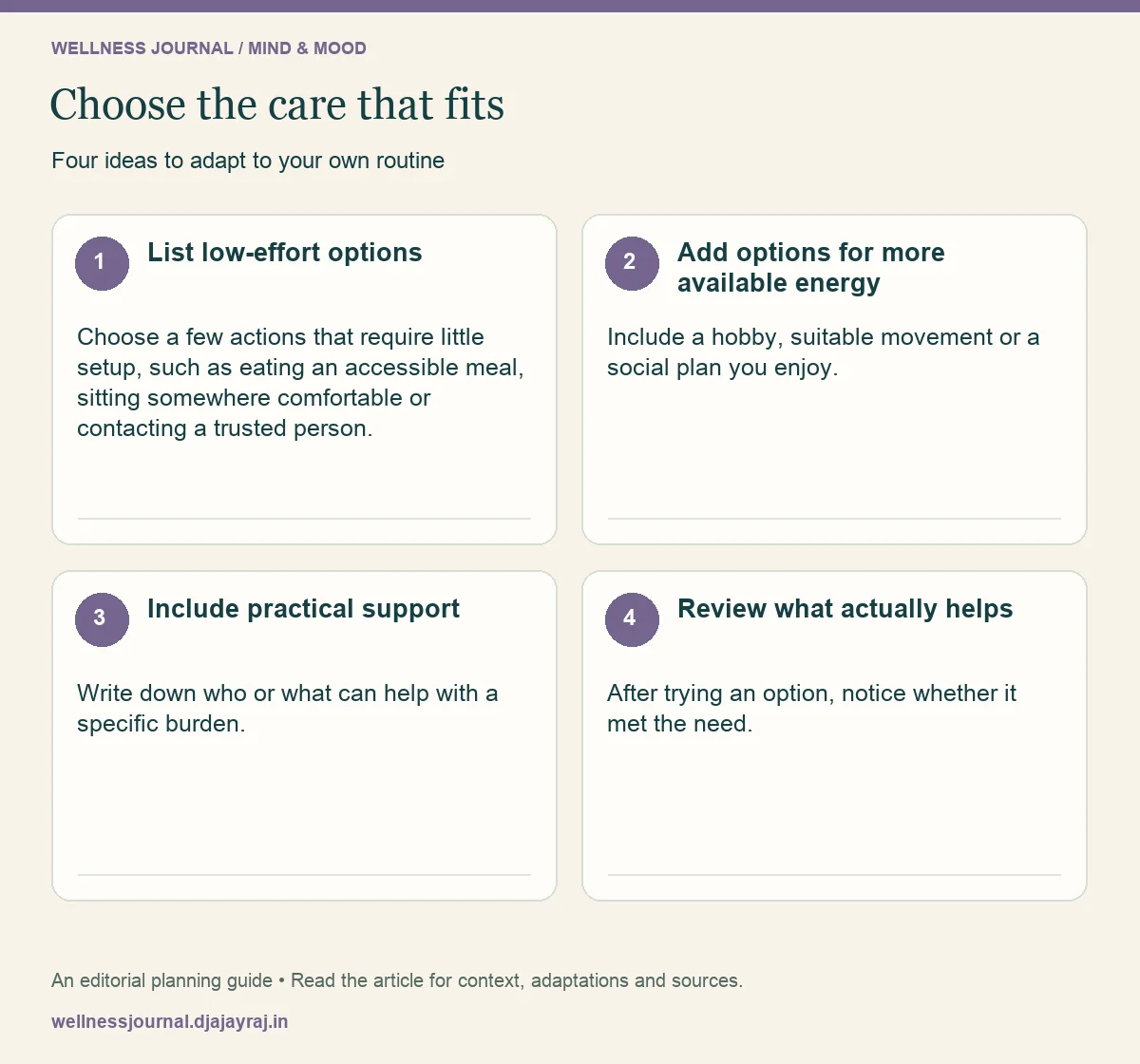
List low-effort options
Choose a few actions that require little setup, such as eating an accessible meal, sitting somewhere comfortable or contacting a trusted person. Keep necessary medical care separate and follow prescribed instructions.
Add options for more available energy
Include a hobby, suitable movement or a social plan you enjoy. These are choices, not a higher level you must earn. Use the option that fits the day.
Include practical support
Write down who or what can help with a specific burden. Self-care can involve asking for assistance or changing a demand, not only doing something alone.
Review what actually helps
After trying an option, notice whether it met the need. Remove activities that feel like obligations or purchases you do not want. Keep the menu personal and changeable.
A small menu with different purposes
| Need | Low-effort option | More involved option |
|---|---|---|
| Basic care | Accessible meal or rest | Prepare a useful routine |
| Connection | Short message | Planned conversation |
| Enjoyment | Music or a few pages | Hobby session |
| Support | Name the problem | Contact an appropriate service |
Make it work for you
Keep structural problems visible
A difficult workload, unsafe relationship or lack of resources cannot always be solved by a better routine. Use the menu to support yourself while seeking the relevant practical or professional help. Avoid interpreting continued distress as proof that you are failing at self-care.
Choose one option, then stop choosing
Once you have selected a suitable action, try it without comparing it with every other possibility. You can adjust afterward if it does not help.
Quick checklist
- Keep the menu short.
- Include support as well as solo activities.
- Do not substitute self-care for needed treatment.
Common questions
Does self-care need to cost money?
No. Many useful options are ordinary actions or support requests. Products are not a requirement.
What if none of the options helps?
Consider whether the need requires a different kind of support. Persistent or severe distress deserves professional attention.