Early signs of stress are often changes from your own usual pattern: becoming more irritable, finding it harder to concentrate or feeling that ordinary tasks are piling up. These observations are worth noticing, but they do not prove stress is the cause. Use them to ask what is happening and what support would help, especially if the changes persist.
Compare with your own baseline
A quiet person is not automatically withdrawing, and a busy day is not automatically harmful stress. Look for a meaningful change in how you feel or function. Consider the context and duration. Avoid using a checklist to label yourself or someone else without a fuller understanding.
NHS guidance describes physical, emotional and behavioural experiences associated with stress. Similar symptoms can also have other causes.
Background guidance: NHS: Getting help with stress; NIMH: Talking with a healthcare provider about mental health.
Four practical steps
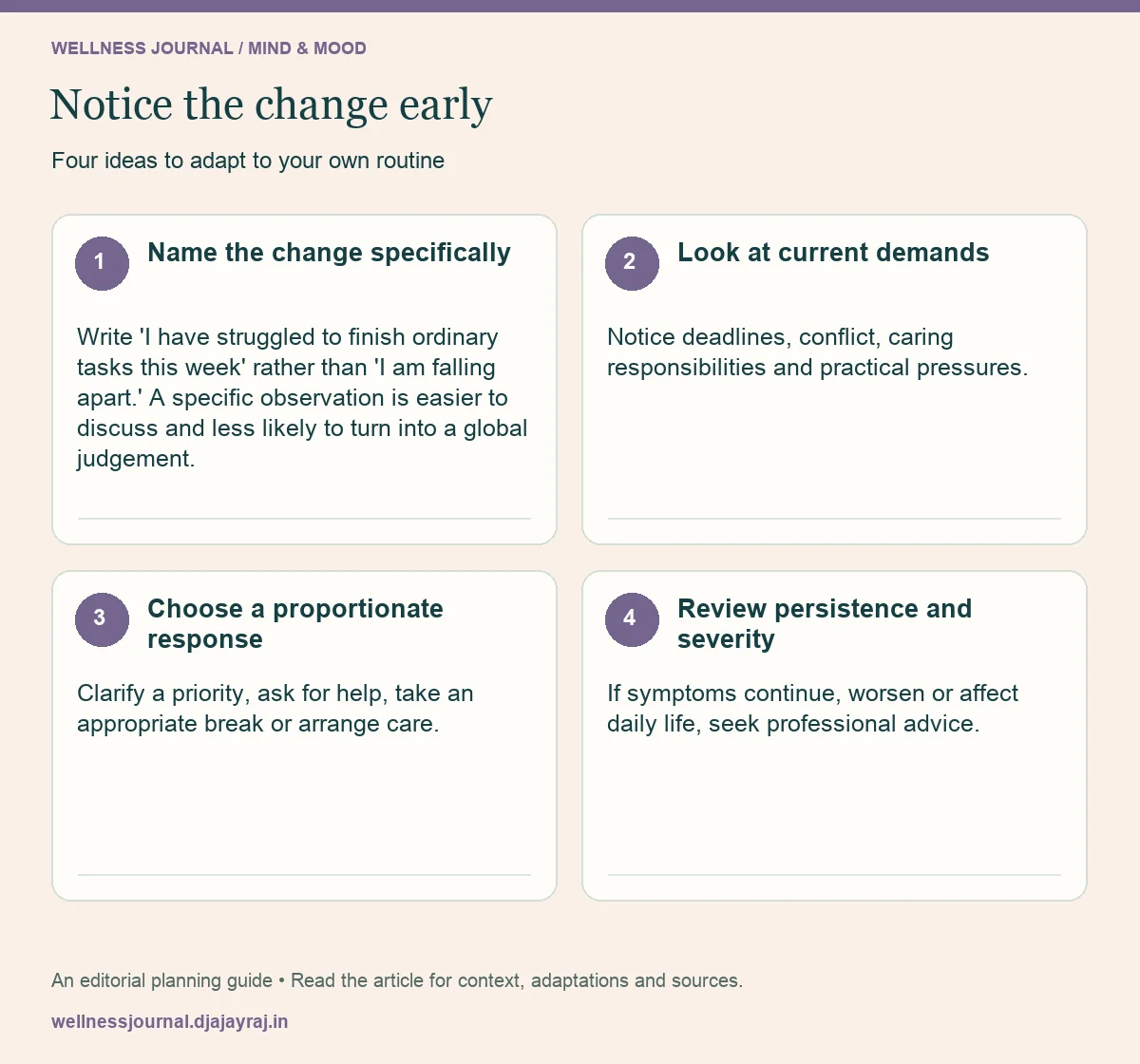
Name the change specifically
Write 'I have struggled to finish ordinary tasks this week' rather than 'I am falling apart.' A specific observation is easier to discuss and less likely to turn into a global judgement.
Look at current demands
Notice deadlines, conflict, caring responsibilities and practical pressures. Include missing resources or support, not only your reaction. The source of strain may require a change in circumstances rather than better coping alone.
Choose a proportionate response
Clarify a priority, ask for help, take an appropriate break or arrange care. Start with the part you can influence. Avoid adding a large self-improvement programme to an already overloaded week.
Review persistence and severity
If symptoms continue, worsen or affect daily life, seek professional advice. New chest pain, severe breathlessness or other acute symptoms should not be assumed to be stress and may need urgent assessment.
From observation to action
| Observation | Useful question | Possible next step |
|---|---|---|
| More irritability | What demands changed? | Discuss pressure or support |
| Harder concentration | Is this persistent or unusual? | Reduce distractions; seek advice if needed |
| Tasks feel unmanageable | What can be clarified or shared? | Choose one priority |
| Concerning physical symptoms | Could this need medical care? | Get appropriate assessment |
Make it work for you
Keep a short personal signal list
If you recognise recurring patterns, note a few signs and the responses that have helped. Keep it flexible and avoid constant monitoring. Share relevant observations with a clinician when needed. The list should make support easier to access, not turn every uncomfortable moment into an alarm.
Ask what would reduce one demand
A clearer deadline, a smaller task or practical assistance may be more useful than another relaxation exercise. Choose the response that matches the problem.
Quick checklist
- Notice changes from your usual pattern.
- Consider causes beyond stress.
- Seek help for persistent or acute concerns.
Common questions
Can I diagnose stress from a checklist?
No. Checklists can prompt reflection, but symptoms may have several causes and may need assessment.
Should coping skills be enough?
Not always. Workload, relationships, health and resources may require practical changes or professional support.