An after work transition routine can help you mark the change between one set of demands and the next. It does not need to make you calm immediately. A brief walk, changing clothes or sitting quietly may be enough to create a little separation. Choose an action that fits your responsibilities, especially if caring or household tasks begin as soon as work ends.
Choose a cue that signals the change
If you commute, part of the journey may already serve as a transition. If you work at home, you may need a more deliberate cue. Keep it simple and repeatable. A routine that requires a long uninterrupted hour may be unavailable on the days when a short pause would be most useful.
Stress can affect how people feel and behave. A transition routine may support a pause, but persistent distress can require broader changes and care.
Background guidance: NHS: Getting help with stress; NIH: Emotional wellness toolkit.
Four practical steps
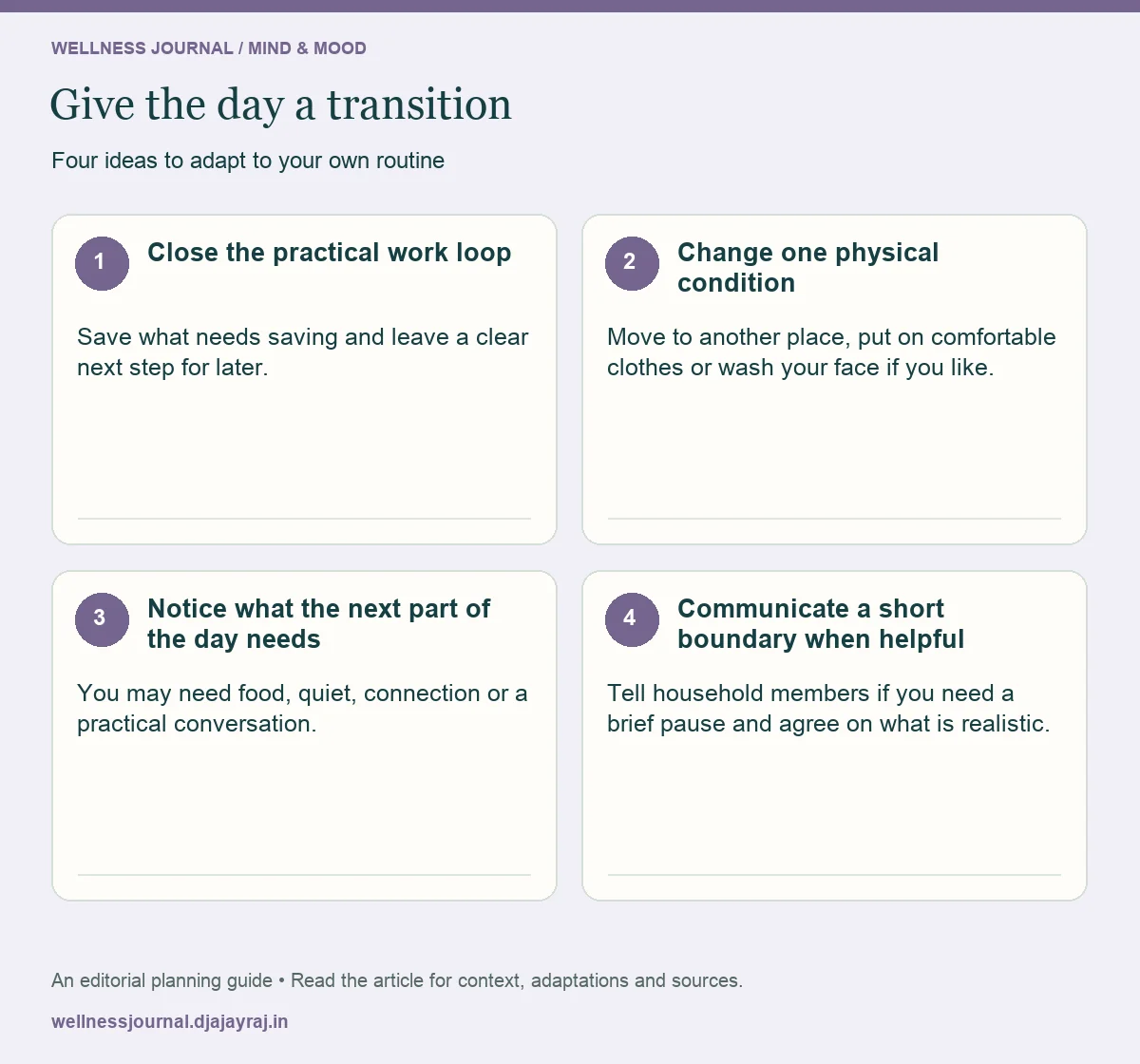
Close the practical work loop
Save what needs saving and leave a clear next step for later. Follow necessary work responsibilities, but avoid adding optional tasks merely because stopping feels uncomfortable.
Change one physical condition
Move to another place, put on comfortable clothes or wash your face if you like. The action should feel useful to you, not be copied because it appears in an ideal evening routine.
Notice what the next part of the day needs
You may need food, quiet, connection or a practical conversation. Name the need before automatically filling the gap with more work or scrolling. You can have more than one need.
Communicate a short boundary when helpful
Tell household members if you need a brief pause and agree on what is realistic. Avoid assuming others can absorb responsibilities without discussion. The transition should fit the shared situation.
Choose a transition that fits the setting
| Setting | Possible cue | Practical limit |
|---|---|---|
| Work from home | Put equipment away | Keep it brief |
| Commute | Use a calm arrival moment | Stay safe during travel |
| Immediate caring tasks | A small agreed pause | Share needs clearly |
| Late finish | Essential care and rest | Skip elaborate rituals |
Make it work for you
Do not blame the routine for an impossible workload
If you remain distressed because the demands are excessive or the environment is unsafe, a transition ritual cannot solve the whole problem. Consider workload conversations, practical support or professional care. The routine is a small aid, not a requirement to privately absorb every difficult condition.
Try a two-minute version
Put work away, notice your current need and choose one next action. A short transition can be complete without stretching into another scheduled activity.
Quick checklist
- Use a clear practical cue.
- Respect shared responsibilities.
- Seek broader support when the problem exceeds the routine.
Common questions
Should I feel relaxed immediately?
No. Feelings may take time to change, and some days remain difficult. The routine simply creates a transition.
What if I have no private space?
Use a small portable cue, such as closing a notebook or changing one item of clothing, and discuss a brief pause where possible.