Frozen and canned foods can turn an empty-looking kitchen into several workable meals. Their main advantage is practical: you can keep useful ingredients available when fresh shopping does not happen. Build the pantry around meals you enjoy rather than collecting products because they seem virtuous. A smaller set of versatile foods is easier to use than a crowded shelf of unrelated ingredients.
Choose ingredients with more than one job
A can of tomatoes might become a soup base, sauce or stew. Frozen vegetables can join several dishes if you like their texture. Beans can support bowls, wraps or warm meals. Write two possible uses for each item before buying a large quantity. If you cannot name a use, a small trial pack may be the better choice.
NHS guidance includes frozen and canned produce among ways to eat fruit and vegetables. Safe preparation still depends on the food and package directions.
Background guidance: NHS: Eating a balanced diet; FoodSafety.gov: Cooking and storage guidance.
Four practical steps
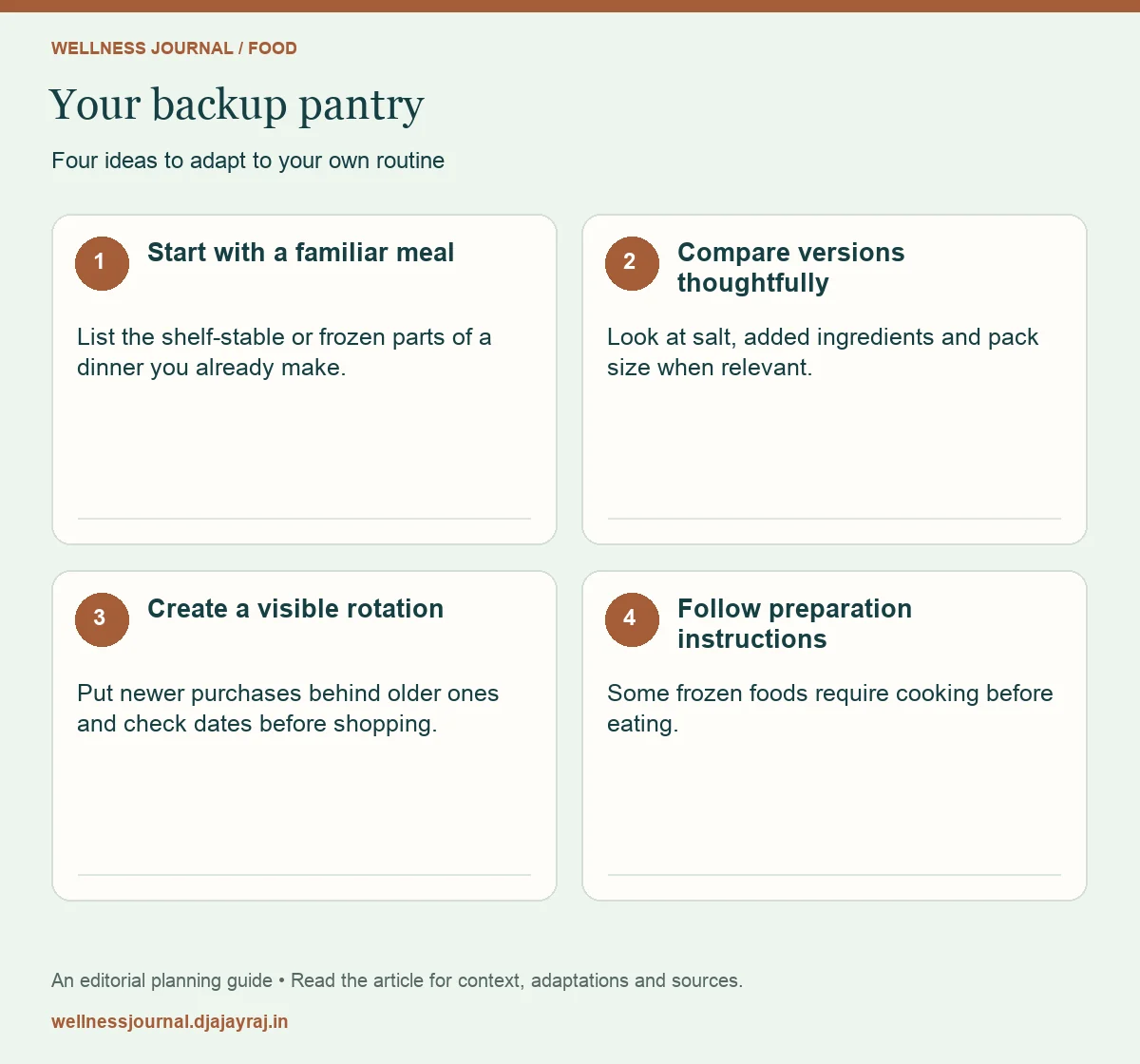
Start with a familiar meal
List the shelf-stable or frozen parts of a dinner you already make. Keep those available first. A backup pantry works best when it helps you cook something recognisable, rather than requiring a new recipe under pressure.
Compare versions thoughtfully
Look at salt, added ingredients and pack size when relevant. Choose products that fit your tastes and needs. Plain versions can be flexible, but a prepared sauce may also be useful when it makes a meal possible on a busy day.
Create a visible rotation
Put newer purchases behind older ones and check dates before shopping. Label opened containers and freezer portions. Keep an inventory short enough to maintain; a complicated spreadsheet may be unnecessary for a small kitchen.
Follow preparation instructions
Some frozen foods require cooking before eating. Check can condition and discard damaged or suspect products according to food-safety guidance. After opening, store the contents as directed rather than assuming the unopened shelf life still applies.
A small versatile starter shelf
| Ingredient | Meal use one | Meal use two |
|---|---|---|
| Canned tomatoes | Quick sauce | Soup base |
| Ready-to-use beans | Warm bowl | Wrap filling |
| Frozen vegetables | Stir-fry addition | Side dish |
| Suitable staple | Simple dinner base | Lunch component |
Make it work for you
Buy for your freezer space
A large bargain bag is useful only if the freezer closes properly and you can find the food again. Keep items accessible and portion them when appropriate. Do not overload the kitchen with emergency purchases that you never use in ordinary meals. A backup supply works best when it is part of your normal rotation.
Write one rescue meal on the shelf
For example: tomatoes, beans, vegetables and a suitable staple. The note is a reminder of a combination, not a rigid recipe. Add fresh ingredients when you have them.
Quick checklist
- Check packaging and dates.
- Follow cooking and storage directions.
- Choose ingredients you will use in several meals.
Common questions
Are frozen foods always less nutritious than fresh?
No blanket rule applies. The food, processing, storage and preparation all matter. Practical access and variety are also useful considerations.
Should I avoid every prepared sauce?
Not necessarily. Compare products when relevant and consider how the sauce fits your overall diet, budget and cooking routine.