Self compassion after a mistake does not mean pretending nothing happened. It means addressing the error without turning it into a verdict on your whole character. You can apologise, correct something or learn a skill while speaking to yourself fairly. A harsh internal speech may feel like accountability, but it can also keep attention on self-punishment instead of the repair that is actually needed.
Describe the mistake at the right size
Write the specific event: you missed a deadline, forgot an item or spoke impatiently. Avoid expanding it into 'I ruin everything.' The narrower description does not minimise the impact; it makes the problem possible to address. Consider who was affected and what information you need before deciding what repair would be useful.
Balanced thinking and emotional coping are discussed in NHS and NIH guidance. Kind self-talk can acknowledge responsibility without using global insults.
Background guidance: NHS: Reframing unhelpful thoughts; NIH: Emotional wellness toolkit.
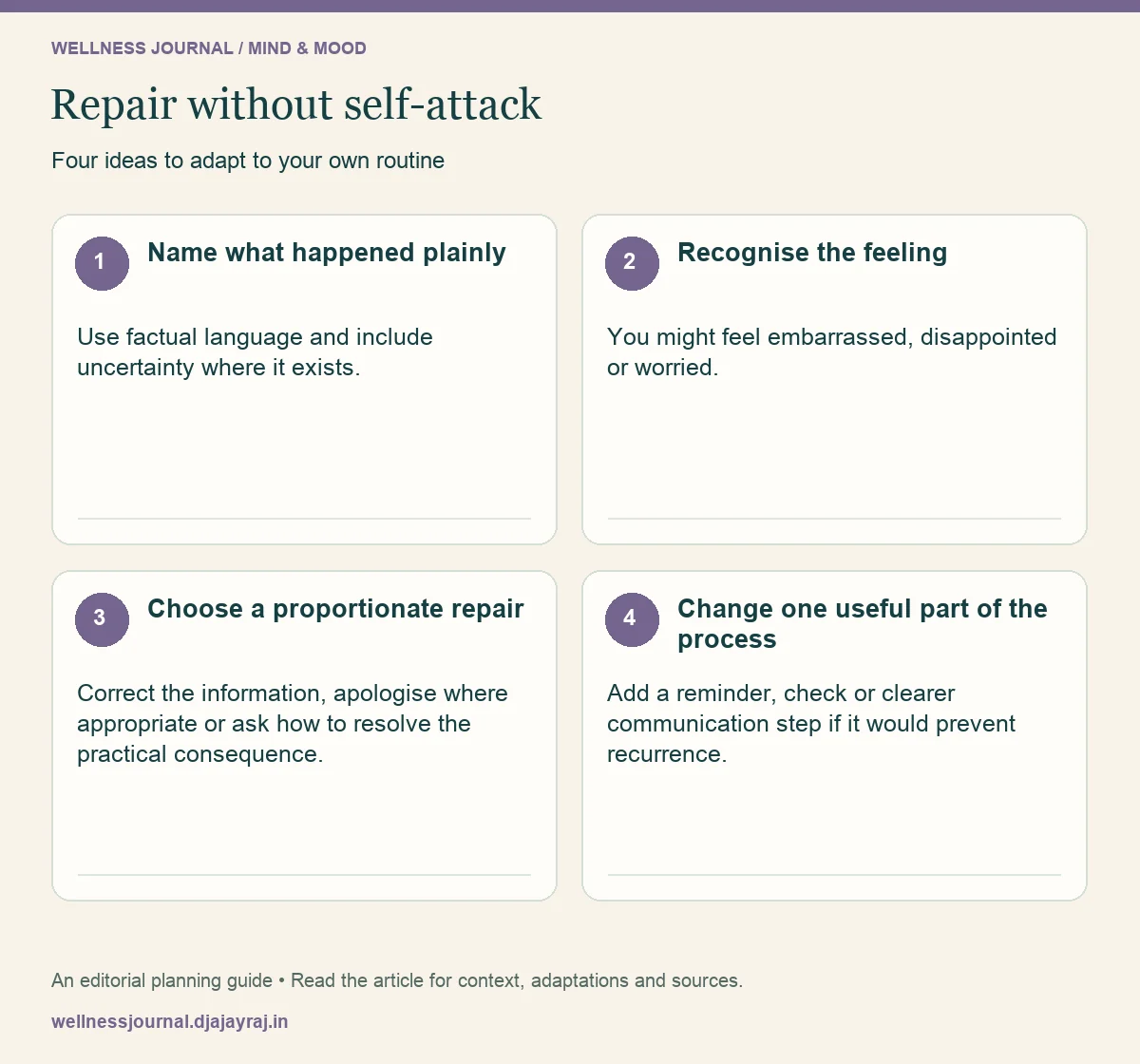
Four practical steps
Name what happened plainly
Use factual language and include uncertainty where it exists. You may know you sent an incorrect figure but not yet know its impact. Check the facts instead of filling the gap with the worst possible story.
Recognise the feeling
You might feel embarrassed, disappointed or worried. Naming the feeling does not excuse the action or require you to make it disappear. It simply acknowledges what is happening while you decide what to do.
Choose a proportionate repair
Correct the information, apologise where appropriate or ask how to resolve the practical consequence. Keep the repair focused on the affected situation. Repeatedly seeking reassurance may not help the other person or solve the problem.
Change one useful part of the process
Add a reminder, check or clearer communication step if it would prevent recurrence. Avoid creating an elaborate punishment routine. The lesson should make the next attempt more workable, not make you afraid to try again.
Replace a global judgement with a useful response
| Self-attack | More specific description | Practical next step |
|---|---|---|
| I am useless | I missed one deadline | Clarify a revised plan |
| I always upset people | I spoke impatiently | Offer an appropriate apology |
| I cannot be trusted | I made an error in this task | Correct it and add a check |
| I should never try | This attempt did not work | Choose one adjustment |
Make it work for you
Keep accountability connected to action
A fair response includes the effect on others, not only how you feel about yourself. Listen if someone explains the impact. At the same time, you do not need to accept abuse or humiliation as a deserved consequence. If self-criticism is persistent, overwhelming or connected to thoughts of self-harm, seek professional support promptly.
Use one believable sentence
Try 'This matters, and I can address the next part.' A modest statement is often more useful than exaggerated reassurance. You can return to the practical task without resolving every feeling first.
Quick checklist
- Describe the specific event.
- Choose a proportionate repair.
- Learn one useful adjustment rather than a punishment.
Common questions
Will kindness make me careless?
Kindness and responsibility can coexist. The aim is to support a useful response, not remove consequences or ignore the mistake.
What if the mistake had serious effects?
Take the appropriate repair and professional advice seriously. A general self-talk exercise does not replace legal, workplace or other necessary processes.