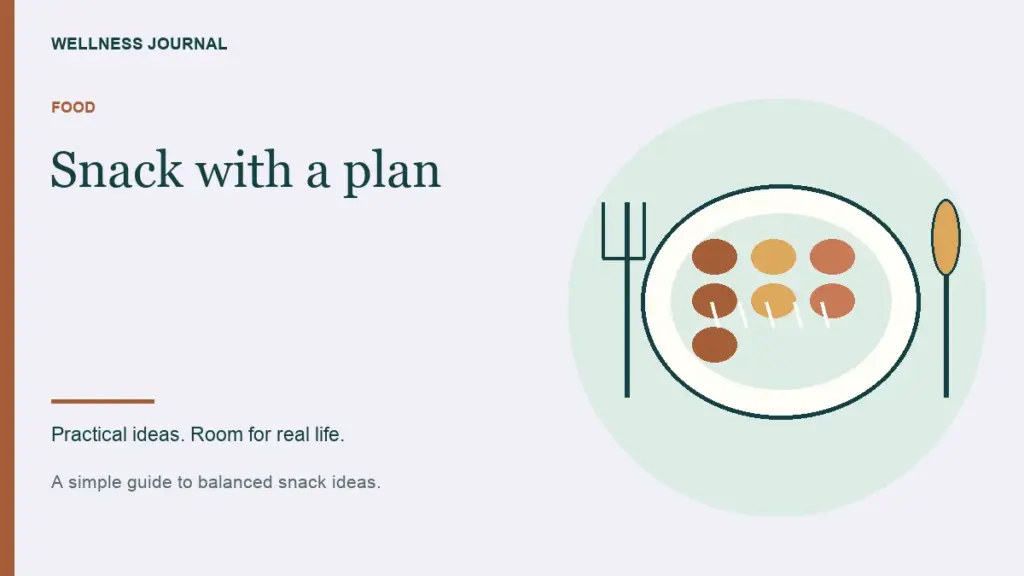
Balanced snack ideas are most useful when they solve a real problem: a late lunch, a long commute or hunger between meals. Snacks are optional, and your needs can change from day to day. Rather than treating every snack as a test of willpower, choose something you enjoy that fits the amount of hunger and the time until your next meal.
Match the snack to the gap
A short wait until dinner may call for something different from a long afternoon with no meal available. Think about the practical gap first. If you are routinely very hungry soon after lunch, the lunch itself may need more food or a different composition. A snack can help, but it does not need to compensate for an eating pattern that leaves you underfed.
NHS balanced-diet guidance emphasises variety across food groups. Labels can help compare packaged options when that is useful.
Background guidance: NHS: Eating a balanced diet; FDA: Understanding the Nutrition Facts label.
Four practical steps
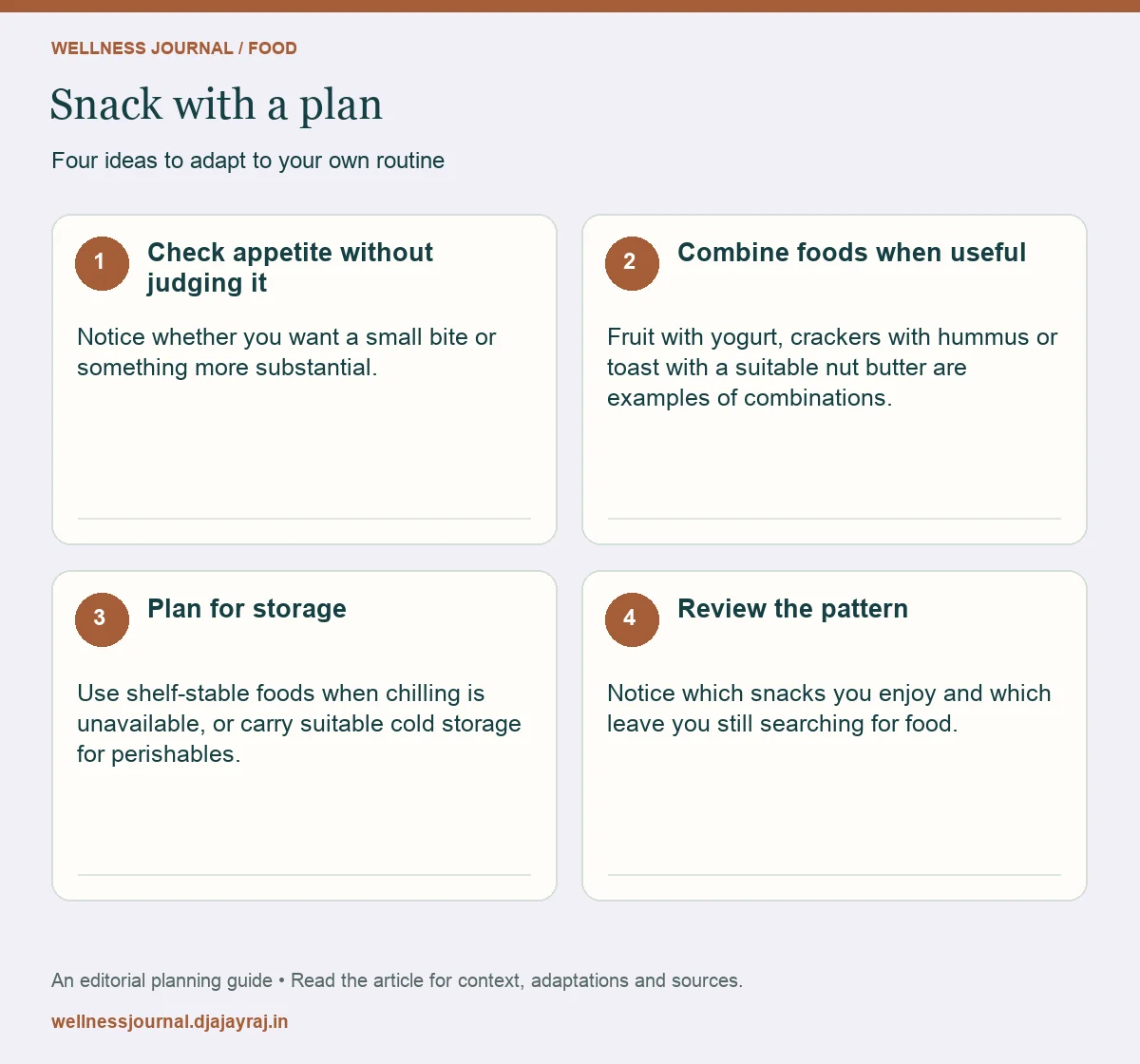
Check appetite without judging it
Notice whether you want a small bite or something more substantial. Hunger is not a moral failure. You can choose a snack because you are hungry, because the schedule demands it or because you want to enjoy food.
Combine foods when useful
Fruit with yogurt, crackers with hummus or toast with a suitable nut butter are examples of combinations. They are options, not compulsory pairings. Check allergies and choose portions that feel appropriate for you.
Plan for storage
Use shelf-stable foods when chilling is unavailable, or carry suitable cold storage for perishables. Keep a practical snack where you can actually access it. A carefully chosen food left at home cannot help during a delayed journey.
Review the pattern
Notice which snacks you enjoy and which leave you still searching for food. Adjust the amount or combination rather than labelling your appetite as a problem. If appetite changes are persistent or unexplained, discuss them with a clinician.
Snack options by situation
| Situation | Possible option | Practical detail |
|---|---|---|
| At home | Fruit and yogurt | Keep yogurt chilled |
| At a desk | Crackers and a suitable spread | Check allergens |
| On a journey | Fruit and suitable nuts | Choose easy-to-carry portions |
| Long gap before dinner | Toast or a small sandwich | Make it substantial enough |
Make it work for you
Leave room for pleasure
A snack does not have to maximise a nutrient to be worthwhile. Favourite foods can fit into a varied eating pattern. If strict snack rules make you anxious or lead to cycles of restriction and overeating, consider support from a qualified professional. Practical planning should make eating easier, not turn every afternoon into an examination.
Make a two-option snack drawer
Keep one shelf-stable option you enjoy and one backup with a different texture. Review the drawer before shopping so expired or unwanted food does not accumulate.
Quick checklist
- Match the amount to your hunger and schedule.
- Check allergens and storage needs.
- Look at meal adequacy if hunger is repeatedly intense.
Common questions
Should everyone eat snacks?
No. Some people prefer larger meals, while others need or enjoy eating between them. Individual medical advice may also influence timing.
Is fruit alone an acceptable snack?
Yes, if it suits your appetite. Adding another food is an option when you want something more substantial, not a requirement.